Certifying a Chainsaw for the EAEU: One Document or Two
A mechanised chainsaw falls under TR CU 010 for machinery safety and TR CU 020 for electromagnetic compatibility. It can be approved as one combined certificate or as a certificate plus a declaration, and the second option can be cheaper, because a certificate requires sample testing for each regulation while a declaration may not.
Which regulations apply?
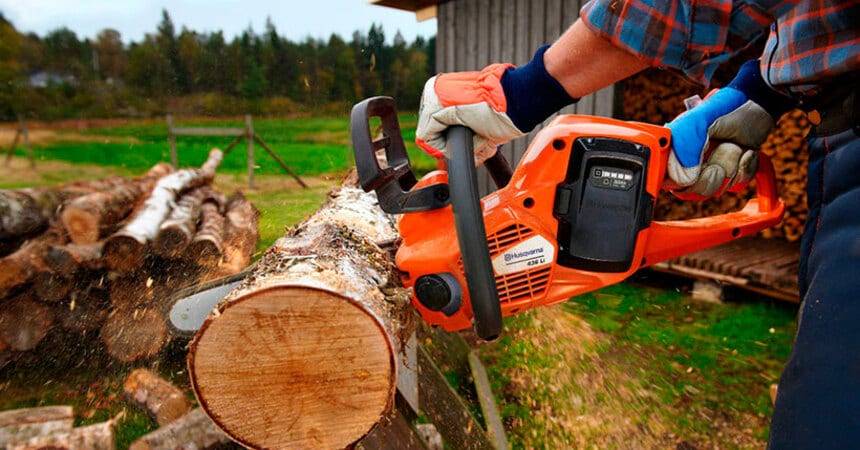
The product is a chainsaw: a combustion-engine-driven tool for cutting wood with a saw chain, built as a compact integrated unit with handles, power source and cutting attachment. Most chainsaws on the EAEU market are classed as household tools for use by private individuals, though this example covers both household and non-household application.
Analysis of the technical information put it under two regulations:
- TR CU 010, On safety of machinery and equipment
- TR CU 020, Electromagnetic compatibility of technical means
Not TR CU 004. The low-voltage directive covers equipment supplied between 50 and 1000 V, and this product falls outside that band. If your product’s supply voltage does sit in the 50 to 1000 V range, a TR CU 004 approval document may well be required, which is why an electric chainsaw is a different exercise from a petrol one.
One document or two?
Two options were on the table.
| Option | Documents |
|---|---|
| Combined | One Certificate of Conformity covering TR CU 010 and TR CU 020 |
| Split | Certificate of Conformity to TR CU 010, plus Declaration of Conformity to TR CU 020 |
The split option works because the product’s EMC characteristics fall within the scope of a declaration rather than requiring a certificate.
The producer chose the split, and the reason is worth stating plainly: a certificate requires testing samples for each regulation. Covering EMC by declaration removed one round of sample testing from the project.
What does the TR CU 010 certificate require?
The certificate requires an audit of the production site, both to verify the quality management system and to determine which samples go to the laboratory. Under COVID-19 restrictions, the audit and the sampling were organised by video.
After the audit, the specified samples go to the laboratory, the lab tests them and drafts the reports, and, if the tests pass, the body issues the certificate.
| Item | Detail |
|---|---|
| Maximum validity | 5 years |
| Periodical inspection | Required if validity exceeds one year, usually annual |
The TR CU 020 declaration
For serial production, two schemes are available.
| Scheme | Basis |
|---|---|
| 1d | The producer’s own EMC test reports, translated into the Union’s working language |
| 3d | Testing of EMC samples in an accredited laboratory inside the Union |
Scheme 1d was chosen, because the EMC report already existed and was readily provided. The declaration was issued on test reports against EN 5012:2007+A1:2009, CISPR 12:2007+A1:2009, EN ISO 14982:2009 clause 6.1, and CAN/CSA-CISPR 12-10, all verified and translated into the Union’s working language in advance.
Scheme 3d is the fallback for two situations: there is no suitable existing test report, or the client in the EAEU specifically requires testing. Then the required number of samples goes to an EAEU laboratory, the reports are drafted there, and the declaration follows.
The decision to take from this
The question worth asking early is not “which document do I need” but “which combination of documents needs the fewest sample rounds”. Two documents can be cheaper than one, and existing EMC reports are an asset, provided they were produced against a standard that will be accepted, and provided someone budgets for the translation.
Sources
- TR CU 010/2011, On the safety of machinery and equipment, Eurasian Economic Commission
- TR CU 020/2011, Electromagnetic compatibility of technical means
- TR CU 004/2011, On the safety of low-voltage equipment
- CISPR 12, EN ISO 14982, EMC standards for combustion-engine-driven equipment
Frequently asked questions
Does a chainsaw need TR CU 004 as well?
Not a combustion-engine chainsaw. TR CU 004 covers low-voltage equipment, meaning a supply between 50 and 1000 V. Where a product's supply voltage falls in that range, an approval document under TR CU 004 can be required, so an electric chainsaw is a different case from a petrol one.
Why issue two documents instead of one?
Because a certificate covering both TR CU 010 and TR CU 020 requires sample testing for each regulation. Splitting them lets the EMC side be covered by a declaration under scheme 1d, issued on the producer's existing EMC test reports translated into the Union's working language, with no further samples.
How long is a TR CU 010 certificate valid?
A maximum of five years. If the validity is longer than one year, a periodical inspection, usually annual, has to be passed. That inspection obligation is part of the cost of a multi-year certificate and is often left out of first estimates.
Not sure which of these applies to your product? Send it and we will tell you
Related articles
TR CU 020: Electromagnetic Compatibility Explained
What falls inside the EMC regulation, which products certify and which declare, the three certification schemes, and the two exclusions worth knowing.
Testing on Site Under TR CU 010 Scheme 5d: A Case
A 5d factory test on polyol mixers at the installation site, what was checked beforehand, the three problems the expert found, and how each was resolved.
EAC Approval for Pumping Equipment: Which Form Applies
Industrial pumps declare, household pumps certify, Ex pumps have one route only. The regulations that stack on top, plus a field-test case study.