
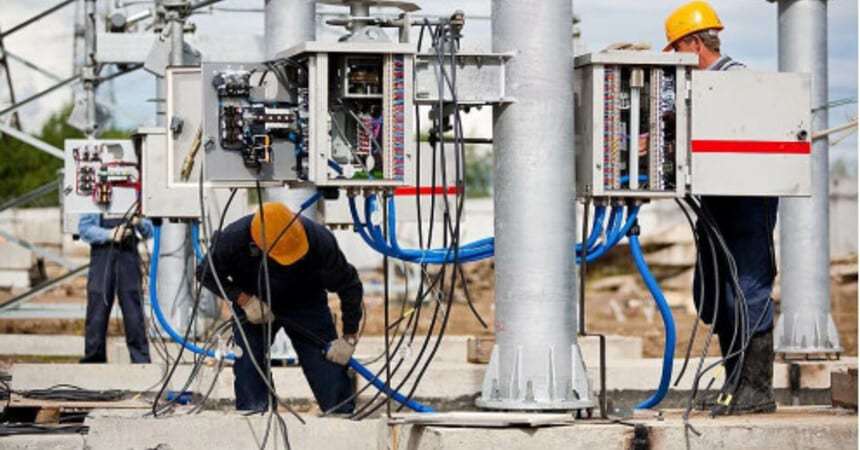
Common Problems in Electrical Safety Certification
Requirements misread, documents incomplete, budgets set too late, samples stuck in transit, the four failures that stall electrical certification.
The four stages above, broken into the work they actually contain. Each is a page that sets out what it produces, what it needs from you, and where it goes wrong.
The cheapest stage decides the cost of every stage after it. What a route assessment names, and the four decisions it locks down.
Accreditation is per standard and per laboratory, never general. How to choose one the destination accepts, and test once for several markets.
The file is the certificate’s foundation and it is the manufacturer’s to produce. What it has to contain, and what cannot be written retrospectively.
Audits turn a schedule from weeks into months and cannot be compressed. What auditors check, and how to be ready for the first visit.
Four major markets refuse to certify a foreign manufacturer directly. What the appointment obliges, and why a distributor is the wrong holder.
A correct certificate and a wrong label still stops at the border. What each market demands on the artwork, and when to check it.
We take a product and a target market and return the document that lets it be sold there. In practice that is four stages, establishing which route applies, arranging accredited testing, obtaining the certificate or declaration, and acting as the local representative where the market requires one. Most clients engage at the first stage, because the route assessment is what determines whether the rest is three weeks or nine months.
The most expensive mistakes are made before any sample ships: testing to the wrong standard, applying to a body without the right accreditation, discovering a local representative is mandatory after the certificate was meant to issue. Re-testing is the largest avoidable expense in certification and representation is the longest-running one. A route assessment settles all three on paper, for a small fraction of the project cost, and it is what stops the large fractions being spent twice.
We do not publish a price list — a figure quoted without seeing the product is wrong in one direction or the other. What moves it is this.
Four things account for almost all of the variation. How many pieces of legislation apply: a mains device with a radio module is assessed under one directive, the same device without the radio under two. Whether a third party has to be involved: self-assessment against harmonised standards is the cheap route, a notified or accredited body reviewing the file the expensive one. How much laboratory time the product needs: priced per standard and per sample, and for textiles per material and colourway rather than per garment. Whether a local representative is required — a recurring annual cost, and the item most often missing from a first estimate.
Send the product and the target market and you get a written, itemised quotation, normally within two working days. Scoping costs nothing and carries no commitment.
Accreditation is per standard and per laboratory, never general. A laboratory accredited for one product standard is not automatically accepted for another, and a report from an unaccredited body can be technically excellent and still be refused. Where a product is going to several markets, one campaign specified for all of them beats one per market — a decision taken before the first booking. How we place testing.
The production site is assessed too under several schemes, and an audit is the item that turns a schedule from weeks into months. Factory audit and training covers what auditors ask for and how a site gets ready.
Several major schemes cannot issue a certificate to a foreign manufacturer at all. The Eurasian Economic Union requires an applicant registered in a member state; Brazil a company with a CNPJ; the European Union and the United Kingdom an economic operator established locally and named in the file. These are legal appointments with real obligations, not mailboxes, and where a client has no local entity we take the role — see authorised representative for why a distributor is usually the wrong holder.
The last thing checked is the artwork, and it is checked twice: by the certification body as part of the file, and at the border by an official comparing a carton against a document. Marking and labelling review covers what each market requires on the label.
The product and its design records. The design rationale, the bill of materials and the manufacturing records come from the manufacturer, and no consultant can write them retrospectively. Where they are thin, that is usually the real project — better found in week one than in month four when a certification body asks. What we can do with them is under technical documentation.
| Stage | What happens | Typical share of elapsed time |
|---|---|---|
| Pre-compliance | Route, document type, evidence list, risk items | Days |
| Testing | Accredited laboratory testing against the selected standards | Weeks; the queue, not the test |
| Certification | Application, technical review, factory audit where required | Weeks to months |
| Representation | Local applicant or authorised representative, ongoing | Continuous |
Factory audits and registration regimes are the items that turn weeks into months. Both are visible at the route-assessment stage and neither can be compressed later.
Everything on the left is something to find before the project starts. Everything on the right is ours. Send what you have and we will tell you what is missing.
You provide
We provide
There is no list price, because the cost is set by the product rather than by the scheme: how many pieces of legislation apply, whether a third party has to review the file, how much laboratory time the product needs, and whether a local representative is required. That is why the first stage is a route assessment rather than a quotation. Send the product name, HS code and target market and you get an itemised written quote, normally within two working days, at no cost and with no commitment.
Yes, and it is usually cheaper than sequentially. Where markets reference the same underlying standards, one test campaign at an accredited laboratory can support several submissions. The saving depends on planning the evidence before the first booking; retrofitting a second market onto testing already completed rarely achieves the same.
Where the scheme requires one, yes. The Eurasian Economic Union, Brazil, the European Union and the United Kingdom all require a locally established entity named in the documentation. Using us rather than a distributor also means the certificate does not have to be reissued if the commercial relationship changes.
A written route and an itemised quotation against it, produced before any testing is booked. Its purpose is to stop a laboratory being booked against the wrong standard, which is the single largest avoidable cost in a certification project. The route assessment page sets out the four decisions it locks down and what each one costs to take late.
That is common and it is better found early. We review what exists against what the destination will ask for and identify the gaps. Filling them draws on your design and manufacturing records, we can specify and structure the file, but the underlying evidence has to come from the people who built the product.
Requirements misread, documents incomplete, budgets set too late, samples stuck in transit, the four failures that stall electrical certification.
RoHS reports for Saudi Arabia must meet local requirements and feed the SABER platform. The four-step route from finding a laboratory to registration.
A 5d factory test on polyol mixers at the installation site, what was checked beforehand, the three problems the expert found, and how each was resolved.
One specialist owns your file from the first email to the registered certificate. Every one of them has recorded a briefing on their field.
Send the product name, HS code and technical data. You get back the applicable route, the document list and a timeline, before any commitment. The first reply says which of the six stages your project needs and which you already have covered.
Scoping is freeReply within one working day