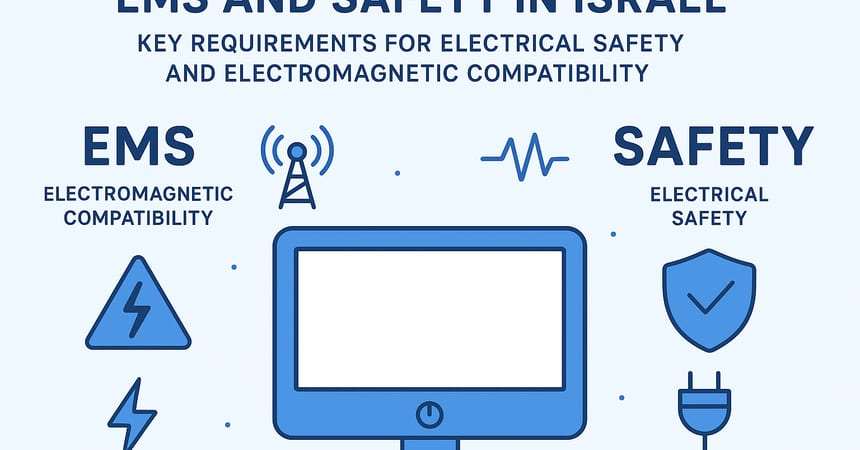
Electrical Safety and EMC Requirements in Israel
Israel's certification system covers Safety and EMC separately. Which IEC standard applies to which product class, and what each test programme covers.
Certification runs on laboratory evidence, and whether a report is usable is decided by two things that have nothing to do with how good the testing was: whether the laboratory is accredited for that specific standard, and whether the destination recognises that accreditation. Accreditation is granted per standard and per laboratory, never generally, so a laboratory accredited for one product standard is not automatically accepted for the next one. We specify the test plan, place the work with laboratories the destination accepts, and where a product is going to several markets we specify one campaign that supports all of them rather than one per market.
The most expensive avoidable cost in certification is re-testing, and it is almost always caused by the same thing: work placed with a laboratory that was competent but not accredited for the standard in question, or accredited by a body the destination does not recognise. The report comes back clean, the certification body refuses it, and the samples ship again.
The recognition question is separate from the accreditation question and has to be asked second. ISO/IEC 17025 accreditation by a recognised national body is the baseline, but several schemes maintain their own lists on top of it — the Eurasian Economic Union requires a laboratory entered in its unified register, and a report from an ISO/IEC 17025 laboratory outside that register is not usable for an EAC document however sound it is.
Where a scheme operates a recognition arrangement, using it is the cheapest route available. The IECEE CB scheme is the clearest example: a CB test certificate and report commissioned once are accepted, subject to national differences, by the member schemes rather than being repeated in each. That only works for a manufacturer who commissioned the testing as a CB project in the first place, which is a decision taken before the first booking.
Markets that reference the same underlying standards can frequently be served by one campaign. The saving is real and it is entirely a function of planning: the test plan has to name every intended destination, so the clauses each of them cares about are covered in one pass and the report is written in a form they all accept.
Where that planning has not happened, the second market is not half price. The reports exist, they were scoped for one destination, and what is missing is precisely the delta the second destination requires — which usually means new samples, a new booking and a new queue.
The queue is the other thing worth planning around. For most product families the elapsed time in this stage is not the test, it is the wait for a slot, and slots are booked weeks out. Sample availability is the reciprocal problem: certification samples have to be production-representative, and a hand-built pre-production unit that differs from what will ship is a finding rather than a shortcut.
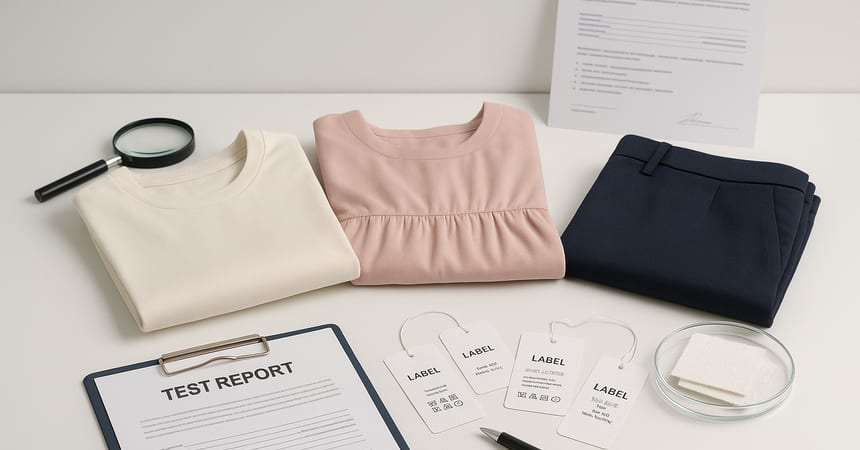
Testing is priced per standard and per sample rather than per product, which is why a small range can cost more than a single complex device. Textiles are the case that catches buyers out most often: testing is priced per material and per colourway rather than per garment, so a six-colour range is six times the work on the parts of the standard that depend on dye.
Destructive testing is the other line item people underestimate. Several safety standards consume the sample, and a product tested to a full suite may need several units. Where samples are expensive, the test plan can often be sequenced so the destructive work happens last, after the cheaper tests have had a chance to fail.
| Question | Baseline | What actually decides it |
|---|---|---|
| Is the laboratory accredited? | ISO/IEC 17025 by a recognised national body | Accreditation is per standard — check the scope, not the certificate |
| Does the destination accept it? | Recognition of the accrediting body | Some schemes keep their own list; the EAEU requires its unified register |
| Can the work be reused? | A report is a report | Only a scheme recognition arrangement such as IECEE CB makes it portable |
| How many samples? | One per test | Destructive tests consume units; a full suite can need several |
| How is it priced? | Per product | Per standard and per sample; textiles per material and colourway |
| How long? | The test duration | The queue for a slot, which is booked weeks ahead |
The left-hand column is what a first estimate assumes and the right-hand column is what the invoice reflects. Every row in it is knowable before the first booking.
Everything on the left is something to find before the project starts. Everything on the right is ours. Send what you have and we will tell you what is missing.
You provide
We provide
Only where that laboratory holds accreditation for the specific standard and the destination recognises the accrediting body. Both halves matter, and the second one catches people: a report from an ISO/IEC 17025 laboratory is still unusable for an EAC document if the laboratory is not in the Eurasian Economic Union unified register. Send any existing reports at the start — reviewing them costs nothing and they sometimes cover more than expected.
It depends on the standard rather than the product, because several safety tests are destructive and consume the unit. A full suite can need a handful. Where samples are expensive we sequence the plan so the destructive work runs last, after the cheaper tests have had the chance to find a problem that would have made the sample moot.
Because textile testing is priced per material and per colourway rather than per garment. The chemical and colourfastness parts of the standard depend on the dye and the substrate, so a six-colour range in two fabrics is twelve combinations on those clauses. Consolidating the range, or the shade card, before testing is the only real lever, and it has to happen before the plan is written.
Frequently, and it is the largest saving available in this stage — but only where the plan named every destination at the outset. Adding a market afterwards means testing exactly the clauses the first campaign did not need, which usually means new samples and a new slot at close to full price.
For most product families the test itself is days and the elapsed time is weeks, because the constraint is the laboratory queue rather than the work. Slots are booked ahead, which is an argument for settling the test plan early even when the samples are not ready — the booking and the samples can be arranged in parallel.
Israel's certification system covers Safety and EMC separately. Which IEC standard applies to which product class, and what each test programme covers.
How many samples, in what state, with what composition data and what labelling, the four preparation areas that decide whether testing passes first time.
Requirements misread, documents incomplete, budgets set too late, samples stuck in transit, the four failures that stall electrical certification.
One specialist owns your file from the first email to the registered certificate. Every one of them has recorded a briefing on their field.
Send the product name, HS code and technical data. You get back the applicable route, the document list and a timeline, before any commitment. For testing, the first reply names the standard edition and the accreditation the laboratory must hold for its report to be accepted.
Scoping is freeReply within one working day