Electrical Safety and EMC Requirements in Israel
Israel's certification system covers Safety and EMC separately. Which IEC standard applies to which product class, and what each test programme covers.
UL certification is what buyers ask for, but the legal requirement behind it is listing by a Nationally Recognized Testing Laboratory under OSHA rule 29 CFR 1910.7, and UL is one of several. An Intertek (ETL) or CSA listing to the same UL standard satisfies the same rule. Radio and electromagnetic behaviour is a separate federal obligation under 47 CFR Part 15, administered by the FCC, and a product with a radio needs both.
Buyers, inspectors and specifications say "UL listed" as shorthand for any third-party safety listing. The requirement behind the phrase comes from OSHA. 29 CFR 1910.7 sets out how a laboratory becomes a Nationally Recognized Testing Laboratory, and 29 CFR 1910.303(a) requires electrical equipment in the workplace to be approved, which an inspector reads as listed by one of them. UL is the best known and wrote most of the standards tested against, but the listing can come from any NRTL recognised for that standard.
The standard is what fixes the test programme. A household appliance is tested to UL 60335-1 with its part 2, an audio, video or IT product to UL 62368-1 (UL 60950-1 was withdrawn in December 2020), laboratory and measuring equipment to UL 61010-1, and an industrial control panel to UL 508A. A manufacturer told they need "UL" can often meet the requirement sooner through another NRTL testing to the same UL standard. The mark differs; the legal standing does not. Where that stops working is a customer contract naming UL by name, and that is a commercial negotiation.
Anything that intentionally radiates radio frequency energy (Wi-Fi, Bluetooth, cellular, any transmitter) is an intentional radiator under 47 CFR Part 15 Subpart C. It needs FCC certification through a Telecommunication Certification Body before it is marketed in the United States, and it carries an FCC ID. This is federal and independent of any NRTL listing.
Digital devices that do not transmit fall under the unintentional radiator rules in Part 15 Subpart B, and most of them use the Supplier's Declaration of Conformity route under 47 CFR 2.906, with no FCC ID. Which route applies is decided by what the device does with radio frequency energy. Complexity has nothing to do with it. A product built on a pre-certified module can reuse the module grant under 47 CFR 15.212, but only inside the antenna, placement and output-power conditions written on that grant.
Energy efficiency is a real barrier for appliances and external power supplies. The Department of Energy sets minimum standards in 10 CFR Parts 430 and 431, the FTC runs EnergyGuide labelling under 16 CFR Part 305, and California adds its own Title 20 appliance regulations with a registration database, MAEDbS. A product missing from that database cannot be sold in California whatever its federal status.
There is also no single national authority for installed equipment. The authority having jurisdiction, usually a local electrical inspector applying the National Electrical Code (NFPA 70), decides whether an installation is acceptable, and the reference point in NEC 110.3(B) is the listing mark and the listing instructions. An unlisted product can be technically safe and still be rejected on site.
| Body | Mark | Recognised as an NRTL? | Notes |
|---|---|---|---|
| UL Solutions | UL Listed / Classified | Yes | Author of most of the standards tested against |
| Intertek | ETL Listed | Yes | Tests to the same standards, commonly UL ones |
| CSA Group | CSA | Yes | Also the primary route for Canada |
| TÜV Rheinland / TÜV SÜD | TÜV | Yes, within scope | Recognition is per standard, not blanket |
| UL 60335-1, UL 62368-1, UL 61010-1, UL 508A | None; these are standards | Not applicable | Any NRTL recognised for the standard may list to it |
| FCC | FCC ID | Not applicable | Federal radio authorisation under 47 CFR Part 15, separate from safety |
NRTL recognition under 29 CFR 1910.7 is granted per standard and per site. A laboratory recognised for one product standard is not automatically recognised for another; confirm scope on the OSHA NRTL list before booking testing.
Everything on the left is something to find before the project starts. Everything on the right is ours. Send what you have and we will tell you what is missing.
You provide
We provide
UL specifically is not. What OSHA requires under 29 CFR 1910.303 for workplace and installed electrical equipment is approval by a Nationally Recognized Testing Laboratory, and OSHA recognises several under 29 CFR 1910.7. An ETL or CSA listing to the same UL standard meets the same obligation. The exception is a customer contract that names UL, which is a commercial term and has to be negotiated as one.
A Listed mark applies to a complete product ready for installation or use as it stands. A Recognized Component mark applies to a part intended to be built into something else, and carries conditions of acceptability describing how it may be used. A product assembled entirely from recognised components is still not itself listed; the finished assembly needs its own evaluation.
Yes. Bluetooth is an intentional radiator under 47 CFR Part 15 Subpart C, so the product needs FCC certification and an FCC ID. If it uses a pre-certified radio module you may rely on the module grant under 47 CFR 15.212, but only within the conditions the module maker specifies: the antenna type, its placement and firmware control of output power. Change any of those and the authorisation becomes yours to obtain.
There is no fixed expiry. The listing continues while the product is unchanged and the factory passes follow-up inspections, four a year under the UL programme. Design changes to safety-critical components need re-evaluation, which is far quicker than the original submission but is not optional.
Israel's certification system covers Safety and EMC separately. Which IEC standard applies to which product class, and what each test programme covers.
What falls inside the EMC regulation, which products certify and which declare, the three certification schemes, and the two exclusions worth knowing.
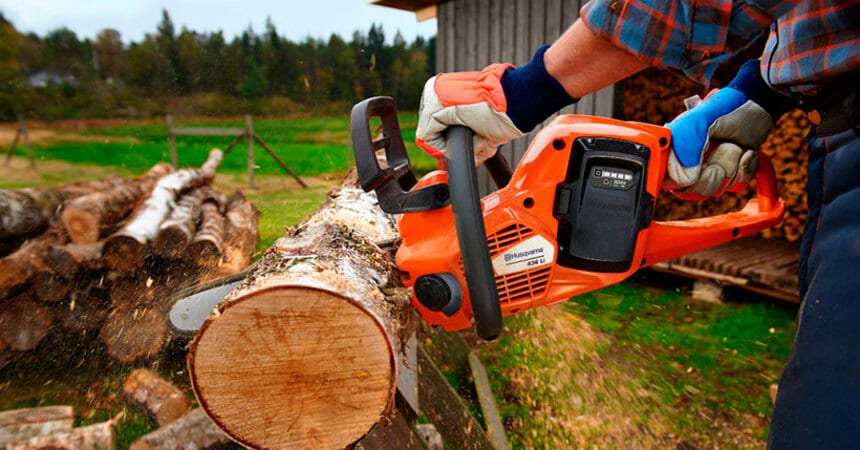
Why a petrol chainsaw falls under TR CU 010 and TR CU 020 but not TR CU 004, and why splitting the approval into two documents saved a round of testing.
One specialist owns your file from the first email to the registered certificate. Every one of them has recorded a briefing on their field.
Send the product name, HS code and technical data. You get back the applicable route, the document list and a timeline, before any commitment.
Scoping is freeReply within one working day