Electrical Safety and EMC Requirements in Israel
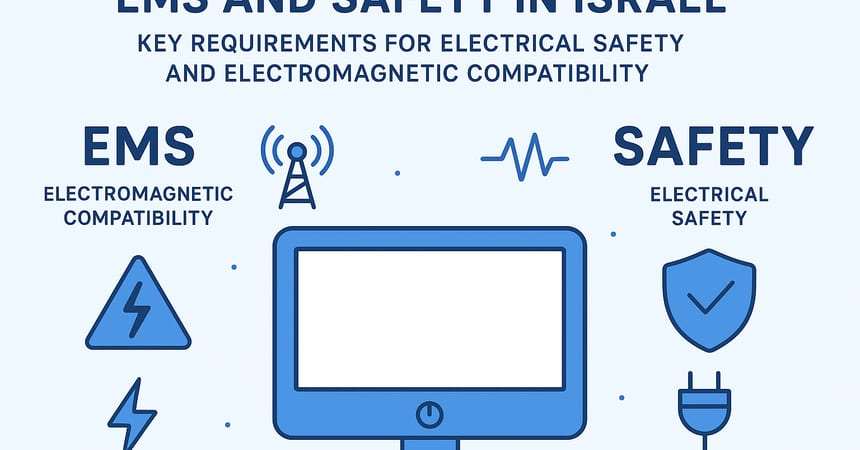
Israel's certification system covers Safety and EMC separately. Which IEC standard applies to which product class, and what each test programme covers.
Three parallel assessments on one appliance, electrical safety, EMC and restricted substances, and the CB report that carries them into other markets.
Reviewed
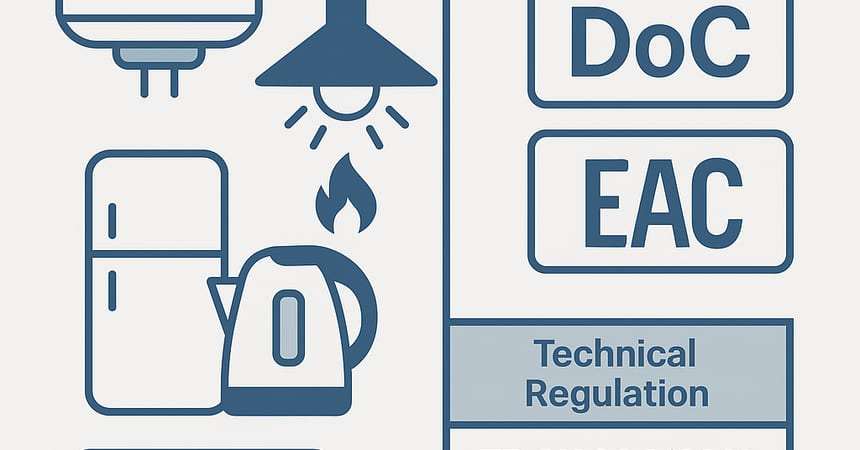
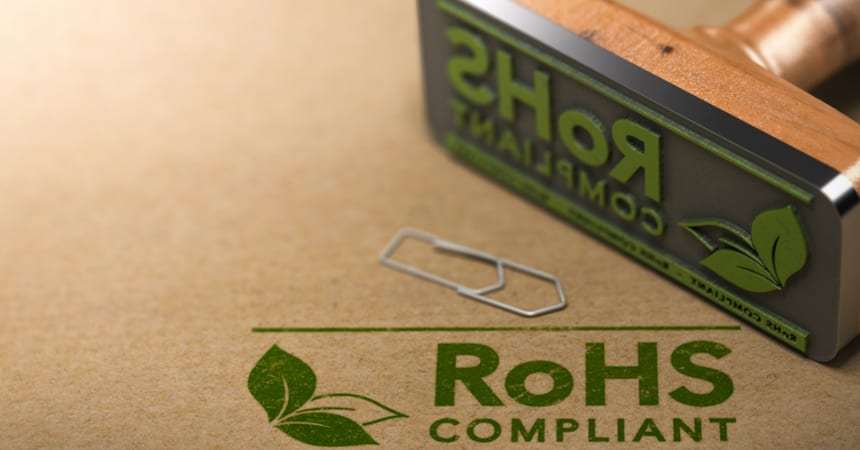
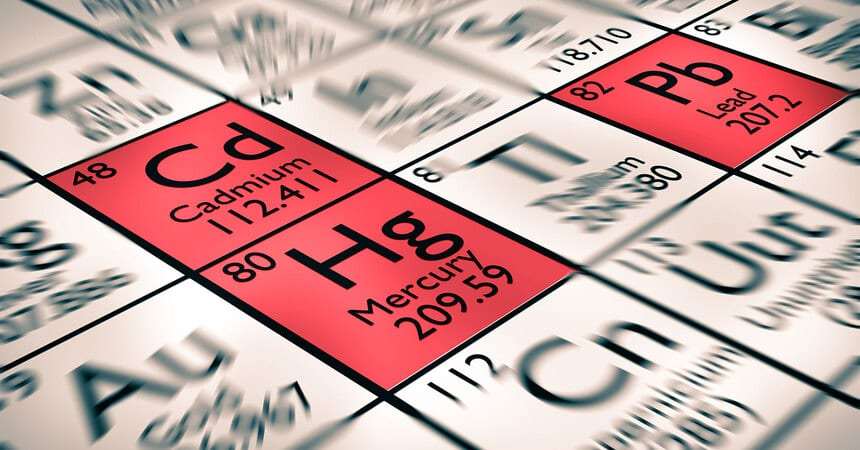
An appliance is rarely one certification project. In the Eurasian Economic Union the same product is assessed three times over: TR CU 004/2011 for the safety of low-voltage equipment, TR CU 020/2011 for electromagnetic compatibility, and TR EAEU 037/2016 for restricted substances, which has applied since 1 March 2020 and limits six materials. The first two are normally issued as a single certificate, while the third is a separate declaration with its own lead time. Europe divides the same product the same way, under the Low Voltage Directive 2014/35/EU, the EMC Directive 2014/30/EU and RoHS.
The lever that stops this work being repeated in every market is the IECEE CB Scheme. You apply to a National Certification Body, a CB Testing Laboratory that the NCB assigns performs the testing, and what comes back is a CB Test Certificate together with a CB Test Report. Other member NCBs then issue their own national approval on an administrative review of those two documents. The Standards Institution of Israel works exactly this way for products rated above 9 V d.c., granting approval on a review of CB reports rather than commissioning its own testing.
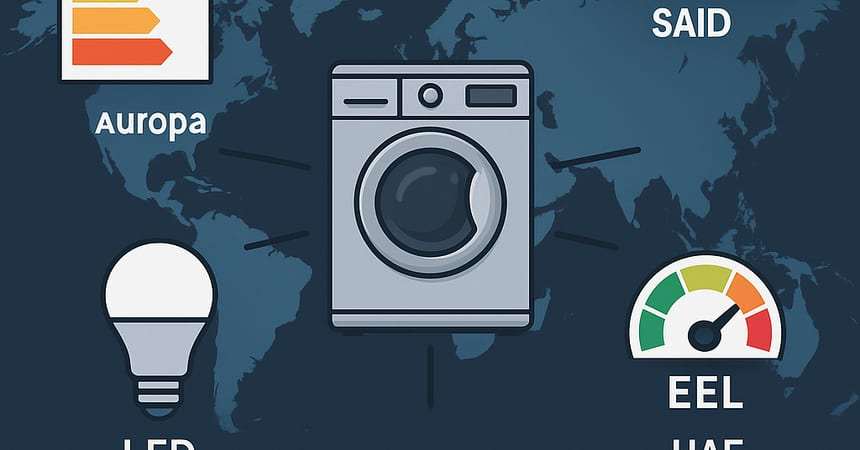
What the CB report does not dissolve is national differences, the deviations a country has declared against the IEC text. Those still have to be tested, and they cost very little inside the original programme against a return trip to a laboratory afterwards, so the target markets have to be named before testing starts. Energy efficiency labelling sits outside the scheme entirely. It is mandatory in the EU, the UAE, Saudi Arabia, South Korea and Kazakhstan, and the class printed on the label is a measured result, so the test data has to exist before the packaging artwork does.
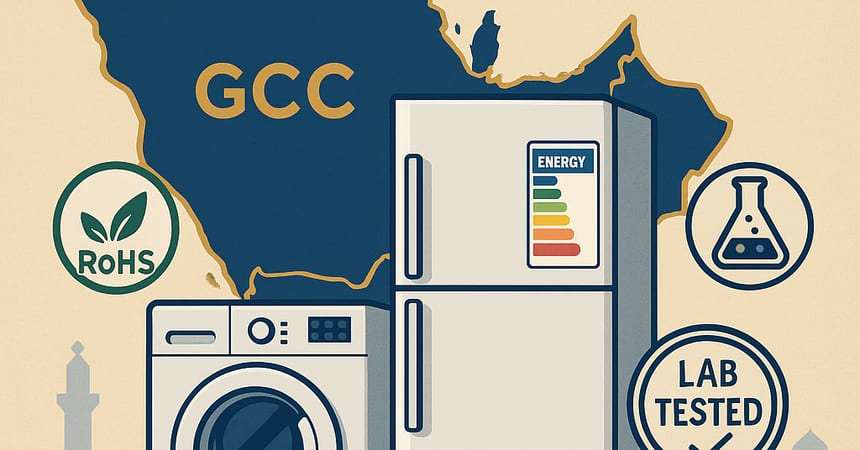
Nor does a CB certificate produce the national document. Saudi Arabia issues a Product Certificate of Conformity through SABER in the name of your importer of record, so it does not follow the goods if you change distributor. The UAE issues ECAS, renewed annually, and the GSO member states run G-Mark on type examination. The articles below work through those routes product by product, from luminaires and power adapters to HVAC and network storage. Five inputs settle the scope of almost any of them: rated voltage and power, the light source or driver fitted, the intended mounting and environment, the target markets, and the technical file.
No articles match that.
Israel's certification system covers Safety and EMC separately. Which IEC standard applies to which product class, and what each test programme covers.
It replaced IEC 60065 and 60950-1 with one risk-based system. What Energy Source Classification changes, and which products it now covers.
Which categories are regulated, the five inputs that decide the answer, and why the same specification can be exempt in one country and not the next.
Which household products declare, which certify, when a fire safety certificate is added, and why an exemption letter is worth having at customs.
Safety to IEC and ISO, mandatory energy labelling, RoHS and recycling rules, local laboratory testing, and documentation in English and Arabic.
Three mandatory approvals for a network storage device, obtained in under five weeks with no hardware submitted. The documents, timings and fees.
What falls inside the EMC regulation, which products certify and which declare, the three certification schemes, and the two exclusions worth knowing.
Requirements misread, documents incomplete, budgets set too late, samples stuck in transit, the four failures that stall electrical certification.
Plug types, voltages and labelling differ by country, and a European product often fails Middle East requirements. What to check before redesigning.
RoHS reports for Saudi Arabia must meet local requirements and feed the SABER platform. The four-step route from finding a laboratory to registration.
SII approval based on CB reports, or a Ministry of Economy exemption by customs code. Plus when MoC type approval applies, and when it does not.
Every LED light sold in the EEA must carry the CE mark, including products made elsewhere. The three directives that apply and the order the work goes in.
The fourth electrical technical regulation of the EAEU. Which products declare, which certify, and why the 24-month transition period is not a holiday.
Each luminaire type is tested against its own IEC 60598-2 part. The mapping from fixed general and recessed to street, flood, emergency and hand lamps.
CE marking for lighting rests on three directives at once. Which standards apply per luminaire type, and which apply to every one of them.
One certificate covers TR CU 004 and 020; RoHS goes on a separate declaration. The four steps, the annual inspection, and why RoHS testing takes a month.
Why a petrol chainsaw falls under TR CU 010 and TR CU 020 but not TR CU 004, and why splitting the approval into two documents saved a round of testing.
Household HVAC needs certificates under TR CU 004 and 020 plus a RoHS declaration. Industrial HVAC needs none of that, it declares under 004, 020 and 010.
Three technical regulations apply to lighting, certification runs on schemes 1c, 3c or 4c, and the test standards differ by fixture type.
The mandatory contents of an operating manual under each regulation, the language rule, and when an electronic-only manual is permitted.
Seven STB standards were reissued on 1 November 2020 with changes to structure, terms and definitions. No new testing was required.
Six restricted substances, a declaration rather than a certificate, and three routes under scheme 1d that turn on which test reports you already hold.
Scheme 1d rests on your own evidence, 3d on an accredited Customs Union lab. And the belief that foreign reports are barred is not in the text.
Thirteen device categories fall under the EAEU restricted substances regulation, from lighting and IT to vending machines, cash registers and sports equipment.
Under TR CU 020 the split is set by list. Household appliances, and equipment connected to personal computers such as printers, monitors, scanners and uninterruptible power supplies, are certified. Everything else in scope is assessed by declaration. The same logic runs elsewhere in the EAEU: household HVAC takes certificates under TR CU 004 and TR CU 020, while industrial HVAC declares. Restricted substances under TR EAEU 037 are always confirmed by declaration, never by a certificate.
Into the member countries on administrative review, without repeating the safety test programme, which is what makes it worth buying for any range sold in more than two markets. It does not cover the national differences a destination has declared, and it does nothing for restricted substances or energy labelling. Budget for the CB programme, a national conversion in each destination, and a separate RoHS file.
Send the product name, HS code and technical data. You get back the applicable route, the document list and a timeline, before any commitment.
Scoping is freeReply within one working day