EAC Certification of Heat Exchangers for the EAEU
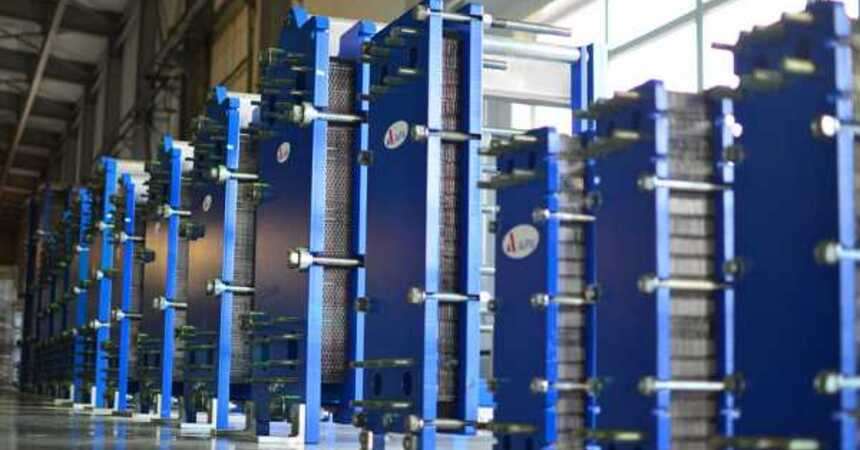
Heat exchangers fall under TR CU 010 always, and under TR CU 032 sometimes. What each route requires, and why tube side and shell side are assessed separately.
ATEX certification is the conformity route for equipment intended for explosive atmospheres under Directive 2014/34/EU, and it is rarely the only regime industrial equipment falls under. A pump for a hazardous area is also machinery under Directive 2006/42/EC, and above a maximum allowable pressure of 0.5 bar it is pressure equipment under Directive 2014/68/EU as well: three assessments, three sets of evidence, one product. IECEx is the international counterpart of ATEX and shares most of its technical content.
ATEX is Directive 2014/34/EU, the EU directive on equipment for potentially explosive atmospheres. IECEx is the IEC's voluntary certification system: a Certificate of Conformity backed by an ExTR test report and a QAR audit of the factory. Both test to the EN IEC 60079 series (60079-0, 60079-1 flameproof, 60079-11 intrinsic safety), so an ATEX notified body normally accepts an IECEx report as the technical basis for its EU-type examination certificate. The reverse does not hold, and neither document satisfies TR CU 012/2011 in the Eurasian Union, which needs its own EAC certificate.
Selling into several regions, do IECEx first and derive the regional certificates from it, because the ExTR is written to be reused. Start with ATEX at a laboratory that does not also issue IECEx test reports, and the gas-group and temperature-class testing may have to be repeated when a Gulf customer asks for IECEx.
The zone decides it, and the zone is set by the site operator under the workplace Directive 1999/92/EC. Zone 0 for gas or Zone 20 for dust, where an explosive atmosphere is present continuously, needs Category 1 equipment. Zone 1 or 21, present occasionally in normal operation, needs Category 2. Zone 2 or 22, present rarely and briefly, needs Category 3. A Category 3 motor installed in a Zone 1 pump house is an illegal installation however good its certificate.
The category sets the third-party involvement. Category 1 equipment, and Category 2 electrical equipment, need EU-type examination by a notified body under Annex III plus production surveillance. Category 2 non-electrical equipment is self-assessed, but the technical file must be lodged with a notified body under Annex VIII. Category 3 is internal production control only. A certificate without the full marking, II 2G Ex db IIC T4 Gb for example, tells a buyer nothing about where the equipment may go.
Directive 2014/68/EU applies to vessels, piping, safety accessories and pressure accessories with a maximum allowable pressure PS above 0.5 bar, and not at all below it. Above it, the nine charts in Annex II sort equipment into Categories I to IV by PS, volume (or nominal size for piping) and fluid group: Group 1 is the dangerous fluids (flammable, toxic, oxidising), Group 2 everything else. Below the Category I line, Article 4(3) applies, sound engineering practice: you follow a recognised code, mark it with your name, and do not CE mark it. From Category I up, CE marking is mandatory: Category I is self-declared under Module A, and from Category II a notified body takes part.
The most common error is assessing the vessel and forgetting the assembly. A skid combining vessels, piping and safety accessories is an assembly under Article 4(2) and needs its own global assessment on top of the component certificates. In the Eurasian Union the same threshold, 0.05 MPa, opens TR CU 032/2013 on equipment operating under excess pressure, with four hazard categories and an EAC certificate or declaration by category.
Machinery assessment under Directive 2006/42/EC is dominated by risk assessment and the technical file; testing is a small part of it. The file follows EN ISO 12100:2010, safety of machinery, general principles for design: identify each hazard, estimate and evaluate the risk, then reduce it in fixed order: inherently safe design, guarding and protective devices, information for use. For the 23 categories in Annex IV, presses for cold working of metals and devices lifting persons more than 3 metres among them, a notified body examines the type unless the machine is built fully to harmonised standards. Everything else is self-declared, and the file is kept for ten years after the last unit is made.
Regulation (EU) 2023/1230 replaces the directive on 20 January 2027 and keeps the structure, adding a short Annex I Part A list where third-party assessment is mandatory whatever standards were used, cybersecurity requirements and digital instructions. In the Eurasian Union machinery falls under TR CU 010/2011: 14 of its listed positions take certification only, and the rest may go by declaration.
For equipment also under ATEX or PED, the machinery file references the other certificates, is assembled last, and is the document that sets the delivery date.
| Regime | Triggered by | Third party |
|---|---|---|
| ATEX, Directive 2014/34/EU | Intended use in Zone 0, 1, 2 (gas) or 20, 21, 22 (dust) | Category 1, and Category 2 electrical: notified body; Category 3: none |
| IECEx | Voluntary; international recognition | Always |
| PED, Directive 2014/68/EU | PS above 0.5 bar; category by PS, volume and fluid group | From Category II; sound engineering practice below Category I |
| Machinery, Directive 2006/42/EC | Assembly with a drive system and moving parts | Annex IV categories only |
| Regulation (EU) 2023/1230 | Machinery placed on the market from 20 January 2027 | Annex I Part A always; Part B by route |
| TR CU 010/2011 | Machinery, Eurasian Union | Certification for 14 listed positions, declaration for the rest |
| TR CU 012/2011 | Explosive atmospheres, Eurasian Union | Always |
| TR CU 032/2013 | Pressure above 0.05 MPa, Eurasian Union | By category |
Equipment meeting two or three of these needs all of them satisfied. They cannot be traded against each other, and the assessments cannot be merged into one document.
Everything on the left is something to find before the project starts. Everything on the right is ours. Send what you have and we will tell you what is missing.
You provide
We provide
No. Directive 2014/34/EU is mandatory for equipment placed on the EU market for explosive atmospheres, and only an ATEX declaration, with the notified-body certificate the category requires, makes it legal. An IECEx certificate is the accepted technical basis for that file and does not replace it.
Only above a maximum allowable pressure of 0.5 bar, where Directive 2014/68/EU starts, and a pressure vessel certificate from a notified body only from Category II. Between 0.5 bar and the Category I line of Annex II, sound engineering practice under Article 4(3) applies and there is no CE mark. From Category II a notified body is involved, and a skid of certified components is itself an assembly needing its own assessment.
No. Each regime issues its own evidence, and a product in scope of all three needs all three. The underlying work can be shared, since material certificates, strength calculations and Ex test data serve more than one assessment, but the three documents remain separate.
Three to nine months is realistic for equipment under more than one regime; the time goes into notified-body examination and file preparation. What moves it most is whether design calculations exist in a reviewable form and how fast EN 10204 3.1 material certificates come out of the supply chain.
Heat exchangers fall under TR CU 010 always, and under TR CU 032 sometimes. What each route requires, and why tube side and shell side are assessed separately.
All 73 product positions under the EAEU machinery regulation, which take a certificate and which a declaration, plus the thirteen categories excluded outright.
Industrial pumps declare, household pumps certify, Ex pumps have one route only. The regulations that stack on top, plus a field-test case study.
One specialist owns your file from the first email to the registered certificate. Every one of them has recorded a briefing on their field.
Send the product name, HS code and technical data. You get back the applicable route, the document list and a timeline, before any commitment.
Scoping is freeReply within one working day