EAC Certification of Heat Exchangers for the EAEU
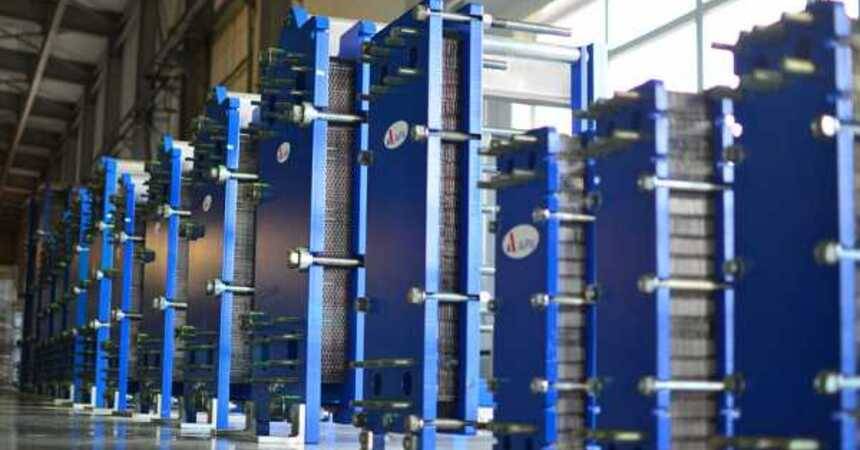
Two regulations govern heat exchangers going to the EAEU. TR CU 010/2011 applies in every case and produces a declaration. TR CU 032/2013 applies to types treated as pressure vessels, spiral and shell-and-tube among them, and can produce either a declaration or a certificate, decided by technical features assessed separately for the tube side and the shell side.
Which regulations apply?
Two, and they are not alternatives.
| Regulation | Applies to | Form |
|---|---|---|
| TR CU 010/2011, Safety of machinery and equipment | Every heat exchanger | Declaration |
| TR CU 032/2013, Safety of equipment operating under excessive pressure | Types treated as pressure vessels | Declaration or certificate |
To supply heat exchangers to the five EAEU member states you need the documents confirming compliance with whichever of these applies, certificates or declarations of conformity, before the goods clear customs.
What does the TR CU 010 route require?
Which product group does the exchanger fall into?
- Cryogenic, compression, refrigeration, autogenic and gas treatment equipment, air separation and noble gas units; equipment for preparing and treating gases and liquids; heat and mass transfer equipment for cryogenic systems; compressors, air and gas-driven; refrigeration units.
- Air heaters and air coolers.
- Chemical, oil and gas processing equipment.
The group follows from the purpose of the specific exchanger. Whichever group it lands in, a declaration of conformity under TR CU 010/2011 is required.
What the declaration needs
The declaration can be issued on the results of testing at the manufacturer’s site or on Customs Union territory, provided the test reports cover every safety requirement TR CU 010 sets. Four things have to be in place:
- Tests on the heat exchangers confirming compliance with the GOST for that product type.
- An equipment safety case, the document holding the risk analysis, plus the information from the design, operational and process documentation on the minimum safety measures required across the whole life cycle.
- A representative in the EAEU to act for the foreign manufacturer and register the declaration.
- Operational documentation translated into the Union’s working language. This is mandatory for the conformity assessment.
Once the declaration is registered, the EAC mark goes on the product, and the mark is what carries it through customs clearance and permits sale in EAEU countries.
To pick the right declaration scheme and assign the product to a group, a certification body needs to know the field of application, whether the exchanger goes to a hazardous facility or a general industrial one, plus a brief technical description and the TN VED code.
When does TR CU 032 apply as well?
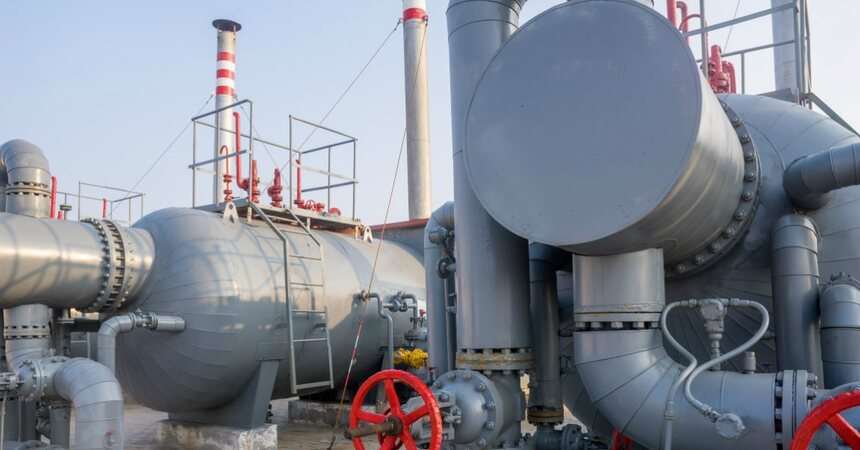
Not every heat exchanger is captured here. Spiral and shell-and-tube exchangers typically are, because they are pressure vessels, and GOST 34347-2017, Steel welded vessels and apparatus. General specifications, is the governing standard for their safety.
Where TR CU 032 applies, there are two possible forms:
- Declaration of conformity under TR CU 032/2013
- Certificate of conformity under TR CU 032/2013
Which one applies depends on the technical features, and here heat exchangers differ from ordinary vessels. The features are considered separately for the tube side and the shell side. Two circuits, two sets of pressures and media, two category calculations.
If a declaration is enough
The sequence is close to the TR CU 010 declaration. Two documents are added: a strength calculation, and a technical data sheet to GOST 34347-2017.
If certification is required
Two further steps appear:
- An audit of the process quality management system
- A test engineer from an EAEU laboratory present at the tests, whether those tests run at the manufacturer’s site or in an EAEU laboratory
What should you send with an enquiry?
- Product description, operation manual or technical file, plus drawings where available.
- HS code.
- Application, the field of use, and whether the facility is hazardous.
- Completed questionnaire.
Sending all four at once is the difference between a scoped quotation and a fortnight of clarifying emails.
Sources
- TR CU 010/2011, On the safety of machinery and equipment, Eurasian Economic Commission
- TR CU 032/2013, On the safety of equipment operating under excessive pressure
- GOST 34347-2017, Vessels and apparatus of steel welded. General specifications
Frequently asked questions
Do all heat exchangers fall under TR CU 032?
No. TR CU 010/2011 applies to every heat exchanger going to the EAEU, but TR CU 032/2013 only captures the ones treated as pressure vessels, spiral and shell-and-tube types among them. GOST 34347-2017, the standard for steel welded vessels and apparatus, is the key standard governing their safety.
What is assessed separately for the tube side and the shell side?
The technical features that decide the approval form. Unlike a conventional vessel, a heat exchanger has two pressure-bearing circuits with their own pressures, capacities and media, so the category calculation is run on each rather than on the unit as a whole.
What extra documents does the TR CU 032 route need?
Over and above the TR CU 010 package: a strength calculation and a technical data sheet drawn up to GOST 34347-2017. If certification is required, add an audit of the process quality management system and the attendance of a test engineer from an EAEU laboratory at the tests.
Not sure which of these applies to your product? Send it and we will tell you
Related articles
TR CU 032 vs the PED Directive: Two Philosophies
Both regulate pressure equipment safety, but one puts risk analysis on the manufacturer and the other prescribes the requirements. What that means in practice.
Strength Calculation: Why TR CU 032 Will Not Move Without It
The strength calculation is a named document in TR CU 032. Which GOST standards govern it, why a foreign calculation is not accepted, and the language rule.
TR CU 032: Certificate or Declaration for a Vessel
How TR CU 032/2013 sorts pressure vessels into categories 1 to 4, which category declares and which certifies, and the declaration and certification schemes.