
Certifying Products for UAE and Saudi Marketplaces
ESMA, SASO IECEE, SABER, halal and G-Mark, which applies, the seven-step process, and the Arabic labelling marketplaces check before listing.
SABER is the online platform through which Saudi Arabia clears imported goods, run by the Saudi Standards, Metrology and Quality Organization. It issues two separate documents and a shipment needs both: a Product Certificate of Conformity, the PCoC, which is obtained once per product from a SASO-notified conformity assessment body and is valid for a year, and a Shipment Certificate of Conformity, the SCoC, which is obtained per consignment and is what customs actually asks for. The account is held by the Saudi importer, not by the exporter, and food, cosmetics, medicines and medical devices do not use SABER at all — they clear through the Saudi Food and Drug Authority instead.
The PCoC is the conformity assessment. The importer registers the product in SABER, the platform determines whether it falls under a Saudi technical regulation, and where it does the importer selects a conformity assessment body notified by SASO for that regulation. That body reviews test reports and the technical file and issues the PCoC, which lasts a year and covers the product rather than any particular consignment.
The SCoC is the customs document. It is requested per shipment against an existing PCoC and against the commercial invoice, and it is what the broker presents at the port. A valid PCoC with no SCoC clears nothing. The two are priced separately and the SCoC recurs for the life of the trade, which is the part most often left out of a first landed-cost calculation.
Products outside the scope of any Saudi technical regulation are not exempt from the platform. They are handled on a lighter route — a self-declaration by the importer rather than a notified body assessment — but they still need an SCoC per shipment, and they still have to be registered.
SABER is entered through a Saudi commercial registration. There is no exporter-side account and no way for a foreign manufacturer to hold the certificates directly, so every SABER project runs through a Saudi importer or through a party acting in that capacity.
This makes the certificate commercially specific in a way an EAC certificate or a CE declaration is not. The PCoC is raised under one importer’s account; a second importer for the same product raises a second one. Where a brand intends to appoint more than one distributor, or to change distributor later, that is worth deciding before the first PCoC is bought rather than after.
It also means the technical evidence travels to a party you do not control. Test reports, the bill of materials, and factory information go into an account held by your customer. Manufacturers who are not comfortable with that generally place the account with an independent representative instead.
Where a product already holds an IECEE CB test certificate and report, SASO recognises that work through the SASO IECEE Recognition Certificate rather than requiring the testing to be repeated in full. National differences still have to be covered, and the Saudi deviations are real, but the bulk of the safety testing is accepted.
This is the single largest cost saving available on the Saudi route for electrical and electronic products, and it is only available to a manufacturer who commissioned the CB report in the first place. Where a product is going to both the Gulf and Europe, commissioning the testing as a CB scheme project rather than as a one-market job is a decision made before the first laboratory booking and cannot be retrofitted afterwards.
Food, beverages, dietary supplements, cosmetics, medicines and medical devices are the Saudi Food and Drug Authority’s territory, and they clear on SFDA certification per shipment through the authority’s own systems rather than on a SABER SCoC. A cosmetics exporter looking for its product category in SABER will not find it, and the correct answer is not a lighter SABER route but a different authority.
Radio and telecommunications equipment carries an additional layer. Anything transmitting on the radio spectrum requires type approval from the Communications, Space and Technology Commission, formerly the CITC, and that approval is separate from and additional to whatever SABER requires of the same device as an electrical product.
Degradable plastics have their own regime. Saudi Arabia requires oxo-biodegradable certification for a defined list of plastic products — carrier bags, bin liners, wrapping and packaging films — tested at an accredited laboratory against the SASO requirement. Ordinary polyethylene film that meets no degradability standard is refused entry for those product codes, which is a specification problem rather than a documentation one and has to be solved at the extruder.
The Saudi Quality Mark is voluntary and sits alongside all of this rather than replacing any of it. It is a per-product mark backed by a factory audit and periodic surveillance, used as a retail and tender differentiator rather than as a border requirement.
| Document | Issued by | Covers | Renewed |
|---|---|---|---|
| PCoC — Product Certificate of Conformity | SASO-notified conformity assessment body, via SABER | One product under one importer account | Annually |
| SCoC — Shipment Certificate of Conformity | The same body, via SABER | One consignment, against an existing PCoC | Every shipment |
| SASO IECEE Recognition Certificate | SASO | Electrical products holding an IECEE CB certificate and report | Per product |
| SQM — Saudi Quality Mark | SASO | One product plus its manufacturing site | Surveillance during the term |
| SASO oxo-biodegradable certification | SASO, on accredited laboratory testing | Listed degradable plastic products, by material | Per material |
| SFDA certification | Saudi Food and Drug Authority | Food, supplements, cosmetics, medicines, medical devices | Per shipment |
Radio-transmitting equipment carries CST type approval on top of every row above; it is a separate authority and is not obtained through SABER. The regulated-product list is revised, and a product outside it today can be inside it at the next revision without anything about the product changing — check the current scope at the point of quoting rather than relying on the last shipment.
Everything on the left is something to find before the project starts. Everything on the right is ours. Send what you have and we will tell you what is missing.
You provide
We provide
The PCoC certifies the product and is obtained once, from a SASO-notified conformity assessment body, with a one-year validity. The SCoC certifies a consignment and is obtained for every shipment against that PCoC and the invoice. Customs asks for the SCoC. A PCoC on its own clears nothing, and an SCoC cannot be issued without a PCoC behind it, so a project that budgets for one and not the other is short in both directions.
No. SABER accounts are opened against a Saudi commercial registration, so the certificates are raised by the importer or by a party acting for you in that capacity. That also makes them importer-specific: a second distributor for the same product means a second PCoC, and the technical file behind the first one sits in an account you do not control. Where more than one distributor is planned, placing the account with an independent representative is the usual arrangement.
Not on its own. The G-Mark is a Gulf-wide type examination under GSO for the two mandatory scopes, low-voltage equipment and toys, and Saudi Arabia participates in it. A shipment into Saudi Arabia still clears on SABER, so the G-Mark is evidence that feeds the PCoC rather than a substitute for it. Products that need both need both.
Yes, less of it. A product outside every Saudi technical regulation is registered in SABER on a self-declaration by the importer rather than assessed by a notified body, but it still requires a shipment certificate for each consignment. The saving is on the PCoC side, not on the per-shipment side, and the scope list changes — a product outside it today can be inside it at the next revision.
Not in SABER. Cosmetics, food, supplements, medicines and medical devices are regulated by the Saudi Food and Drug Authority and clear on SFDA certification through its own systems, per shipment. Looking for a cosmetics category inside SABER and concluding the product is unregulated is a common and expensive misreading; the product is regulated, by a different authority.
ESMA, SASO IECEE, SABER, halal and G-Mark, which applies, the seven-step process, and the Arabic labelling marketplaces check before listing.
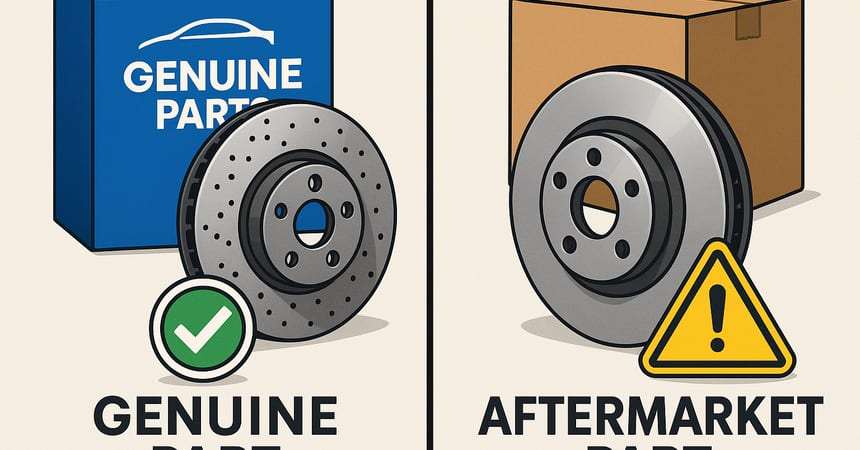
Genuine parts usually take a declaration; aftermarket parts take full testing per product code. Getting the classification wrong costs months, not days.
MOIAT, SABER, G-Mark and ESMA are separate schemes with one shared goal. Which products need approval, what the labs test, and what goes in the technical file.
One specialist owns your file from the first email to the registered certificate. Every one of them has recorded a briefing on their field.
Send the product name, HS code and technical data. You get back the applicable route, the document list and a timeline, before any commitment. For SABER, the first reply says whether the product needs a PCoC before the shipment certificate and which SASO-approved body can issue it.
Scoping is freeReply within one working day