Cosmetics Certification for the UAE and Saudi Arabia
ECAS certificates and Dubai Municipality Montaji registration in a week, GHAD registration and an SFDA shipment certificate in a month, with no samples.

ECAS, EQM, MOIAT, TDRA, Dubai Municipality and the marketplaces that check for them all. Which scheme each product category takes and where applications fail.
The UAE controls product safety through mandatory certification across six broad categories, each with its own authority. Electrical and electronic goods go through ECAS under MOIAT, with the Emirates Quality Mark above it for high-risk categories. Cosmetics register with Dubai Municipality through Montaji and with MOHAP. Food needs Arabic labelling and halal for anything with animal-derived ingredients, and sensitive categories such as baby food need ECAS and EQM. Telecom and wireless devices take TDRA type approval, which sits outside the schemes we run ourselves.
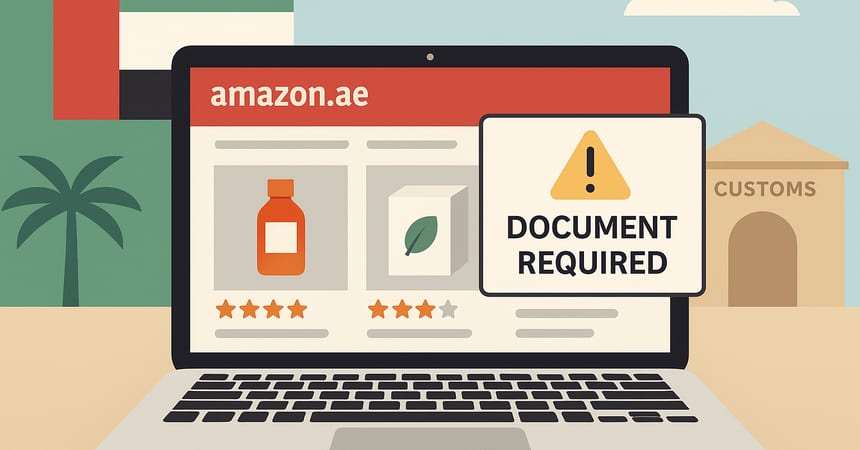
Applications fail on documents and not on assessment. The NAS case under this tag obtained TDRA, ECAS LVE and ECAS RoHS in under five weeks with no hardware submitted, because the test protocols already existed and fitted. A rejected ECAS application does not wait for a correction; it is re-filed. Food labels are rejected for five avoidable errors, the date format among them. And a marketplace listing on Amazon.ae or Noon does not exempt anyone from the same law: the platform, customs and the regulator each act separately, so registration in the government systems comes before registration on the platform.
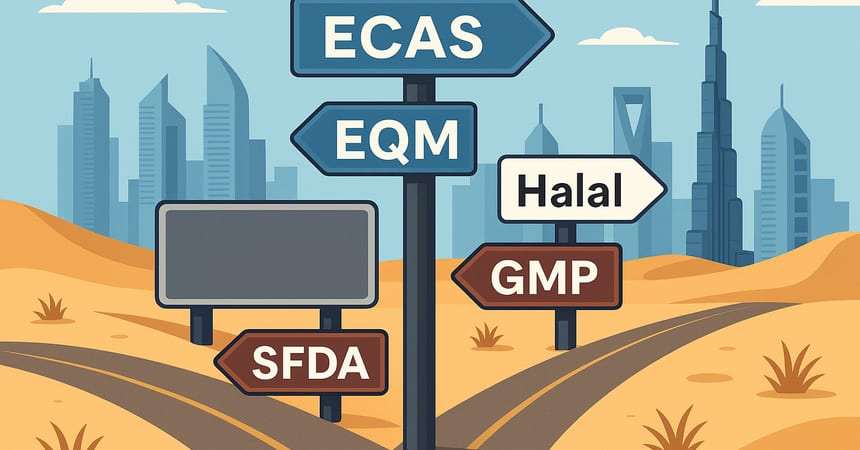
Three to eight weeks is the ECAS range where CB or other ISO/IEC 17025 reports exist, longer with EQM and its factory audit. The articles below cover the choice between ECAS, EQM, halal, GMP and SFDA, the mandatory categories for 2025, food labelling, cosmetics and marketplaces. Send the product and the HS code and we will name the scheme and the authority.
No articles match that.
ECAS certificates and Dubai Municipality Montaji registration in a week, GHAD registration and an SFDA shipment certificate in a month, with no samples.
MOIAT, SABER, G-Mark and ESMA are separate schemes with one shared goal. Which products need approval, what the labs test, and what goes in the technical file.
Opening a store is easy; UAE product compliance law still applies. Which categories need certification, what happens without it, and the limited exceptions.
ECAS, EQM, Emirates Halal, GMP and SFDA do different jobs. Five questions that identify which your product needs, and where money gets wasted.
Dubai Municipality registration, a trade licence, physical stock in country and ongoing compliance, the four things a listing requires before the first sale.
Three mandatory approvals for a network storage device, obtained in under five weeks with no hardware submitted. The documents, timings and fees.
Six categories, from food and cosmetics to vehicles, baby products and medical devices, with the authority and the specific requirements for each.
ESMA, SASO IECEE, SABER, halal and G-Mark, which applies, the seven-step process, and the Arabic labelling marketplaces check before listing.
The six things a UAE food label must carry, the five mistakes that get shipments rejected, and why the date format matters more than exporters expect.
Finding suppliers willing to commit, coordinating ten engineers, and persuading a client that international testing is worth it. What actually unblocked each.
ECAS and EQM for sensitive categories like baby food, the documentation and testing that gets applications rejected, and the MOIAT platform in between.
ECAS is the baseline for most consumer goods and rests on test reports. EQM is the higher mark for high-risk categories and brings a factory audit. The category decides, and picking EQM where ECAS suffices buys no extra compliance. The choice article under this tag walks through the five questions.
Where the category is regulated, no. Selling without the ECAS, halal or registration the category requires is illegal, and the consequences arrive from the platform, from customs and from the regulator separately. Unregulated categories such as clothing and stationery are the real exception.
Send the product name, HS code and technical data. You get back the applicable route, the document list and a timeline, before any commitment.
Scoping is freeReply within one working day