Halal, Kosher and National Standards in the GCC
Halal opens the market and national certification makes the product legal. Neither substitutes for the other, and customs checks both.
10 articles tagged Halal.
No articles match that.
Halal opens the market and national certification makes the product legal. Neither substitutes for the other, and customs checks both.
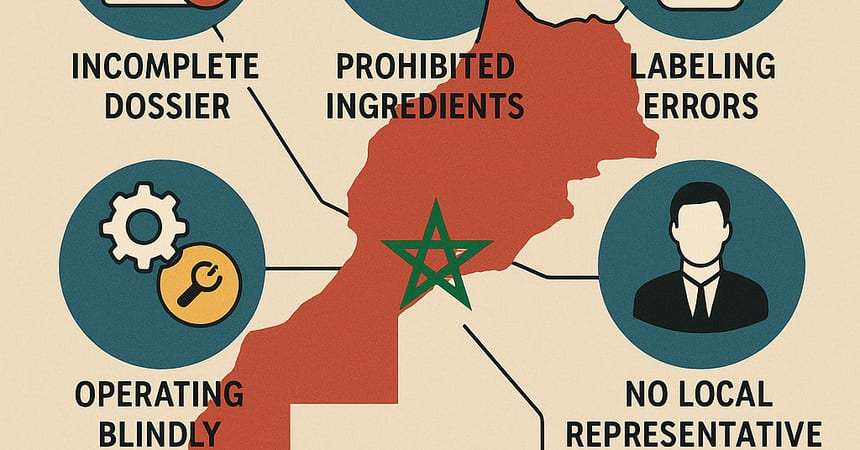
Moroccan NM standards are largely harmonised with European ones, so ISO and CE do real work. Which certificates each sector needs, and four common mistakes.
Four sectors where halal now matters in Morocco, the requirements for food and for cosmetics and pharmaceuticals, and how IMANOR treats foreign certificates.
Morocco has no separate supplement category, products register as food or as pharmaceuticals. That classification sets the route and the document package.
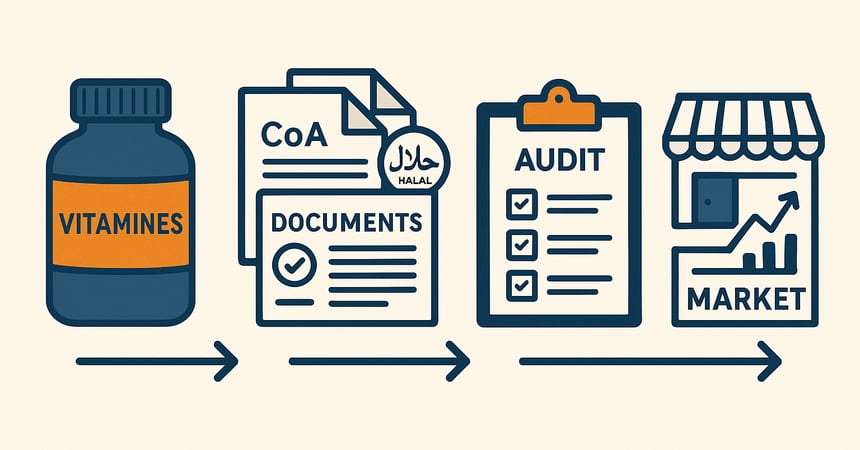
When a supplement needs a halal certificate, which international bodies IMANOR recognises, the documents required, and a 3 to 6 week timeline.
Ingredients legal in the EU but banned in Morocco, medical claims on labels, no local representative, and a four-month timeline people budget three weeks for.
No legal definition of nutraceutical exists, so classification decides everything: ONSSA or DMP, three to five months, and a mandatory local representative.
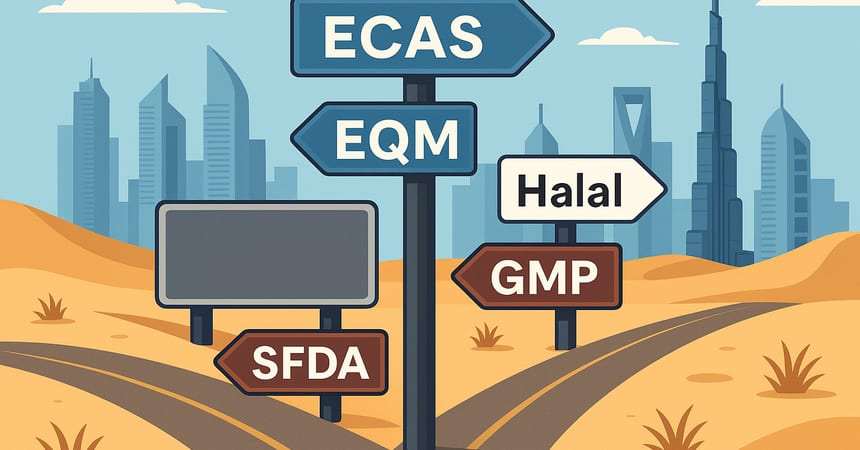
ECAS, EQM, Emirates Halal, GMP and SFDA do different jobs. Five questions that identify which your product needs, and where money gets wasted.
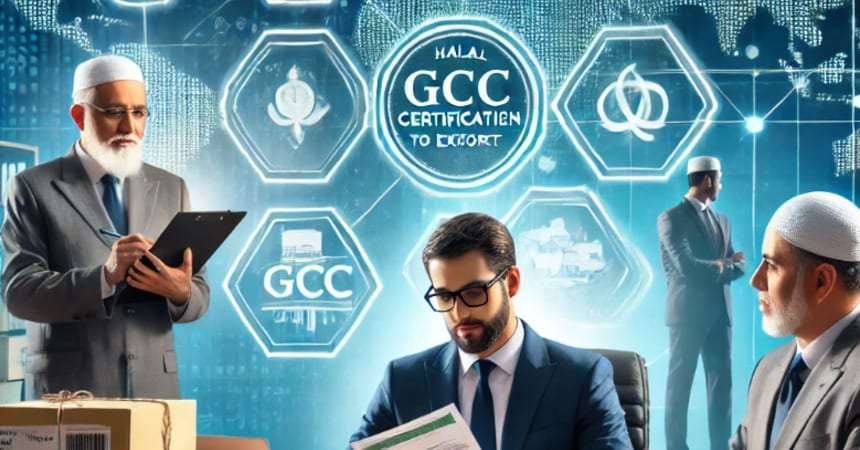
Which products need it, which certification bodies the GCC actually recognises, and the audit and laboratory stages between application and certificate.
The six things a UAE food label must carry, the five mistakes that get shipments rejected, and why the date format matters more than exporters expect.
Send the product name, HS code and technical data. You get back the applicable route, the document list and a timeline, before any commitment.
Scoping is freeReply within one working day