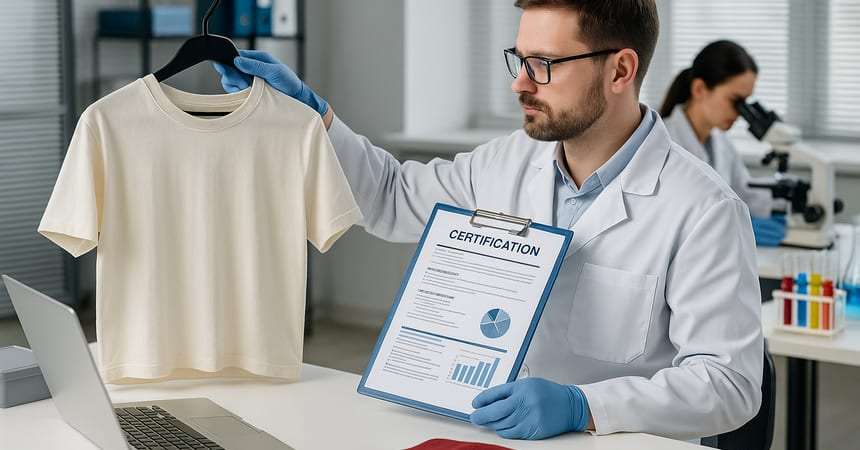
Clothing Certification in 2025: What Gets Checked
Fabric composition drives which tests apply, the label is the product's passport, and a lab discrepancy means no certificate, plus fines for false labelling.

Light industry products for the EAEU. Why skin contact decides certificate or declaration, why foreign test reports are refused, and what the label must say.
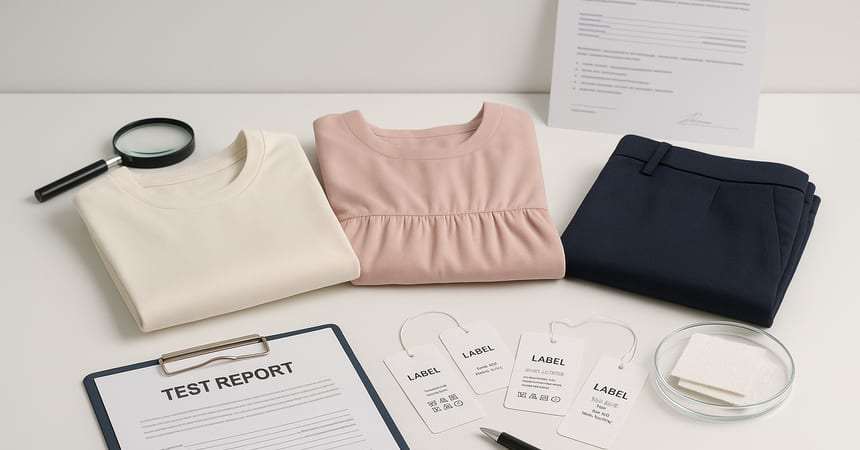
TR CU 017/2011 covers light industry products for adults: clothing, footwear, textiles, leather, fur and accessories. Which document a garment takes is settled by a single question, how much of it touches the skin. First-layer products, underwear, t-shirts, hosiery, need a certificate of conformity. Second and third layer, limited contact and outerwear, need a declaration. Intended use sets the layer, whatever the fabric. Anything for a person under 18 leaves this regulation for TR CU 007, which has stricter tests and a different age logic.
Clothing gets no acceptance of foreign test reports. Every adult garment imported into the Union is tested in a Union laboratory, every test must pass, and one failure means no document and no import. The failure we see most is a stated composition that does not match the garment down to lining and thread, because the lab tests what arrives. Samples matter too: finished, unworn and unwashed, with an invoice under 200 EUR that says the goods are for testing, a label in Russian on every item, and a courier who can supply the customs declaration you will need to register the document.
A certificate for serial production means a factory audit and sampling, on site or by recorded video. The Istanbul t-shirt audit under this tag ran from ten in the morning to seven in the evening, with the absence of ISO 9001 as the main friction. The label then has its own mandatory fields under 017, with extras by product type. The articles below cover the layers, the testing rule, the label, samples, the audits and clothing in 2025. Send the composition and the intended wearer and we will name the document.
No articles match that.
Fabric composition drives which tests apply, the label is the product's passport, and a lab discrepancy means no certificate, plus fines for false labelling.
How many samples, in what state, with what composition data and what labelling, the four preparation areas that decide whether testing passes first time.
A one-day audit and sampling visit to an Istanbul t-shirt factory: the five steps, what to confirm before travelling, and why ISO 9001 shortens it.
Skin contact decides the document. First-layer products certify, second and third layer declare, and the layer follows from intended use, not from the fabric.
Which technical regulation applies to your textiles, the mandatory label fields under TR CU 017/2011 and 007/2011, and the extras by product type.
Adult clothing must be tested in the EAEU, one failed test fails the product, and a composition that does not match the declaration fails by construction.
A recorded video conference in two stages, quality management system, then sampling. What the expert asks to see, and what the decision turns on.
The invoice fields that keep samples under the customs threshold, the label every item needs, and why the courier choice can sink the registration.
No. Unlike some electronics, adult clothing under TR CU 017 must be tested in an accredited laboratory inside the Union, and the composition the lab finds has to match the composition you declare. Plan the sample shipment as part of the project, because samples stuck at customs are the most common delay.
Direct skin contact. Underwear, t-shirts, socks and bed linen are first layer and certify. Shirts and dresses with limited contact are second layer, coats are third, and both declare. Intended use decides, so a cotton garment sold as outerwear stays third layer whatever the fabric.
Send the product name, HS code and technical data. You get back the applicable route, the document list and a timeline, before any commitment.
Scoping is freeReply within one working day