TR CU 017 Testing: Why Clothes Cannot Use Foreign Reports
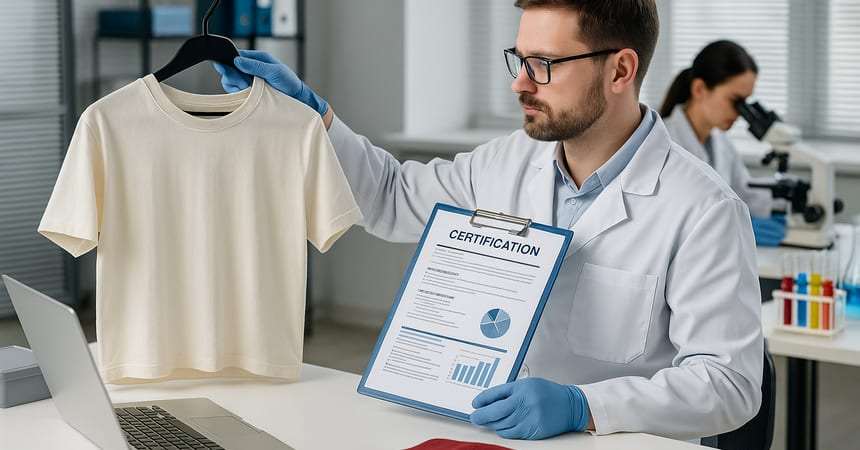
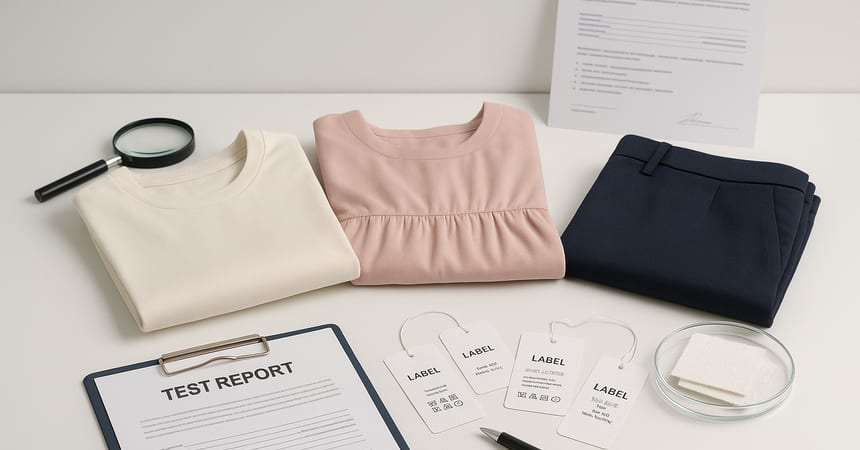
Unlike some electronics, clothing gets no acceptance of foreign test reports. All adult clothing imported into the EAEU must be tested, and every test must pass, one failure means no approval document and no import. The most common cause of failure is a stated composition that does not match the garment.
Can foreign test reports be used for clothing?
Some product types allow foreign test reports as evidence, certain electronic devices among them. Clothing does not.
Testing in the EAEU is the law of the union, so all adult clothing imported into the five EAEU member states must go through the procedure and obtain either a Declaration of Conformity or a Certificate of Conformity under TR CU 017/2011, On safety of light industry products.
Which document applies depends on the type of clothing. The steps differ between the two, but testing is common to both.
One failure fails everything
Products are subject to numerous tests, and every result must be positive. A single failed test means the product does not get its approval document, and therefore cannot be imported.
There is no partial pass and no remediation of an individual result within the same assessment.
The most common cause of failure
A mismatch between the actual product and what the manufacturer declares.
If a T-shirt is 100% cotton, the composition submitted for certification must say 100% cotton. Declare something else and the tests will fail.
The reason is in the GOST standards: they prescribe different testing techniques for different materials. Submit the wrong composition and the laboratory applies the wrong method, and the result is an outright failure.
This is why the full material breakdown matters for every part of the product. Many garments contain lining, padding and trims, and each of those is a material the standard treats separately.
What do the tests measure?
Water absorption, sometimes called hygroscopicity. The ability of textile materials to absorb water vapour from the surrounding atmosphere and retain it under given conditions. It varies with relative humidity and temperature rather than being a fixed property.
Qualitative and quantitative determination of composition. Several methods depending on the chemical properties involved, fire, since how something burns is informative; water; chemical reactions, which laboratories use widely. Fibres are examined under microscopes.
Breathability. The ability of fabric to let air through, ventilating the clothing and creating a particular gas and moisture composition in the space under it. The same material can have different breathability depending on how the fibres are braided.
Toxicity. A hygienic indicator measuring the effect of water and air extracts from the sample on a biological test system, assessing general toxic effect on living cells without a detailed quantitative analysis of toxic substances.
How long does testing take?
Tests take two weeks, and several samples of each position are required. Both figures belong in the plan from the start, because neither can be compressed by paying more.
Sources
- TR CU 017/2011, On the safety of light industry products, Eurasian Economic Commission
- GOST standards adopted alongside TR CU 017 for textile testing methods
Frequently asked questions
Can foreign test reports be used for clothing?
No. Unlike some product types where foreign reports are accepted, certain electronic devices, for instance, testing in the EAEU is required by law for clothing. All adult clothing imported into member countries must be tested before a declaration or certificate under TR CU 017/2011 can be issued.
What happens if one test fails?
The whole assessment fails. Products undergo numerous tests and all results must be positive; a single failure means the product does not receive its approval document and therefore cannot be imported.
Why does the declared composition matter so much?
Because the GOST standards prescribe different testing techniques for different materials. If a T-shirt is 100% cotton, the composition submitted for certification must say 100% cotton, a mismatch means the wrong test method is applied and the tests fail. Every part of the garment counts, including lining and padding.
Not sure which of these applies to your product? Send it and we will tell you
Related articles
Clothing Certification in 2025: What Gets Checked
Fabric composition drives which tests apply, the label is the product's passport, and a lab discrepancy means no certificate, plus fines for false labelling.
Preparing Clothing for Laboratory Testing: A Checklist
How many samples, in what state, with what composition data and what labelling, the four preparation areas that decide whether testing passes first time.
TR CU 017 Layers: Which Approval Your Garment Needs
Skin contact decides the document. First-layer products certify, second and third layer declare, and the layer follows from intended use, not from the fabric.