Food and Beverage Certification in Israel
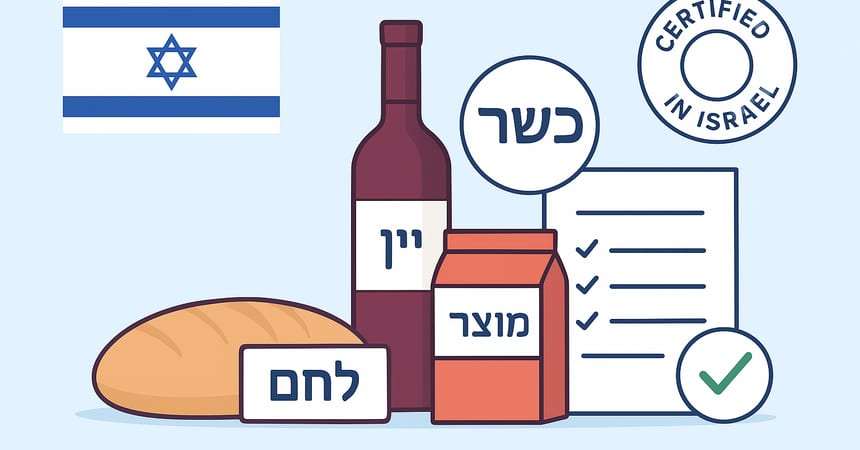
Three authorities, Hebrew labelling that is mandatory rather than customary, and kosher status that is not legally required but commercially decisive.

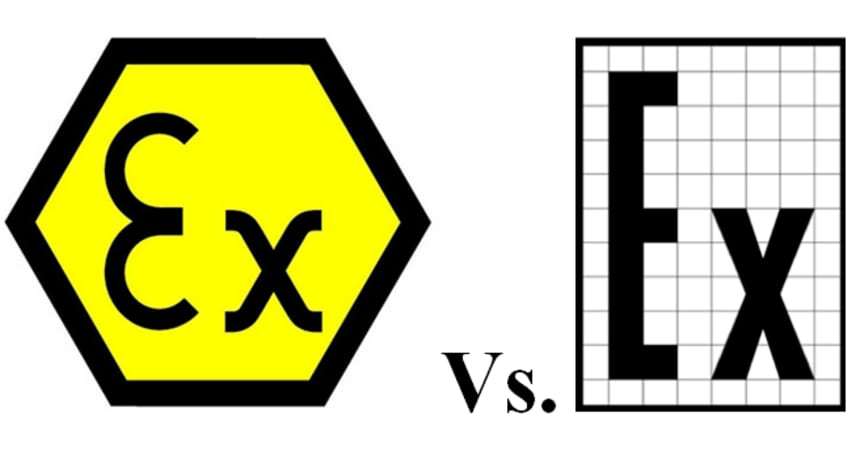
The label fails more shipments than the laboratory. EAC fields by regulation, Arabic and Hebrew rules, food date formats and the Ex nameplate.
The label is the second decision point on every project and the more frequent point of failure. Each EAEU regulation sets its own mandatory fields: fifteen items on a cosmetics label under TR CU 009, the applicant’s representative among them; composition, nutrition and the EAC sign under TR CU 022 for food; product-type extras under TR CU 017 and 007 for clothing, footwear, fur and leather; six mandatory items on the nameplate of explosion-proof equipment under TR CU 012, placed where an inspector can read it without tools and made to survive the life of the equipment. All of it in Russian before import, and a re-labelling after arrival is not provided for.
Other markets add their own. A UAE food label must be in English, may repeat in Arabic, and has to carry the importer, composition in descending order of mass with allergens highlighted, nutrition, and dates in day-month-year format; most rejections trace back to five avoidable errors. Toy warnings for the Gulf go on in Arabic. Israel requires Hebrew. China requires a Chinese counter-label carrying the GACC registration number. Canada requires bilingual labelling. Clothing everywhere lives or dies on the composition line, because the laboratory tests what the label claims and a discrepancy means no certificate and, in some markets, a fine.
Energy efficiency labels are a separate obligation with their own logic: whether a product needs one turns on five inputs, and the same specification can be exempt in one country and regulated in the next. The articles below cover each regulation’s fields, the Ex marking code, food labelling, textiles and energy labels. Send us the artwork before print and we will mark what is missing.
No articles match that.
Three authorities, Hebrew labelling that is mandatory rather than customary, and kosher status that is not legally required but commercially decisive.
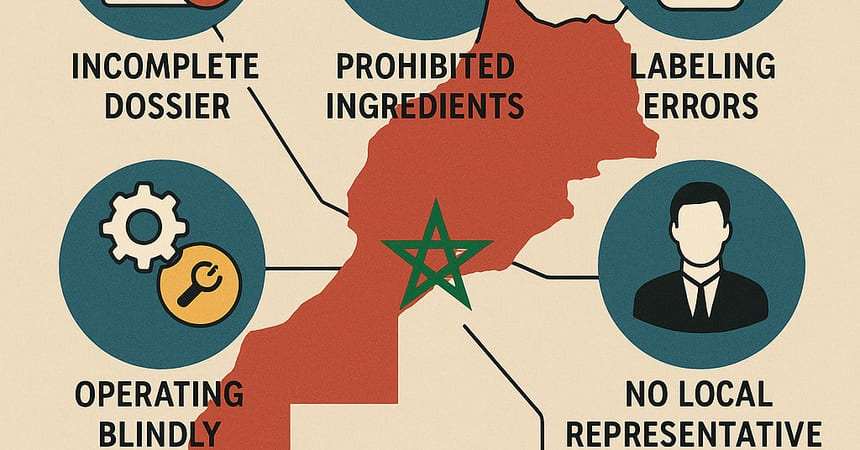
Ingredients legal in the EU but banned in Morocco, medical claims on labels, no local representative, and a four-month timeline people budget three weeks for.
Which chemical products need approval, the four factors that decide the route, and the scheme names by market: REACH, K-REACH, ECAS, SFDA and TR CU.
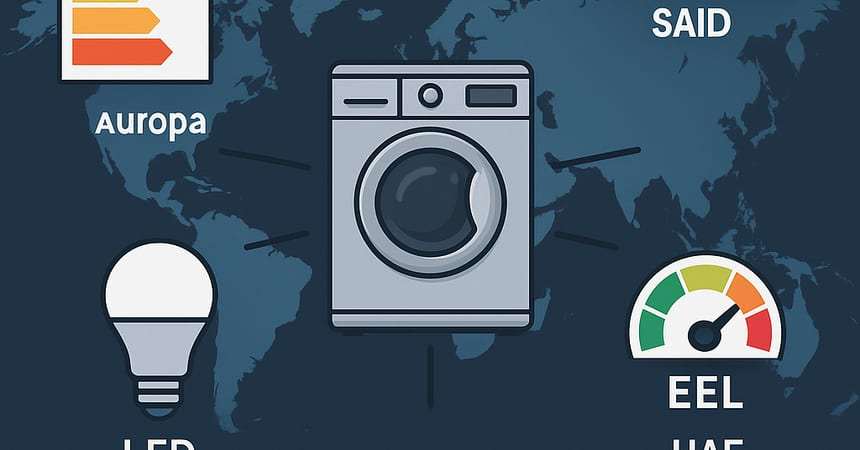
Which categories are regulated, the five inputs that decide the answer, and why the same specification can be exempt in one country and not the next.
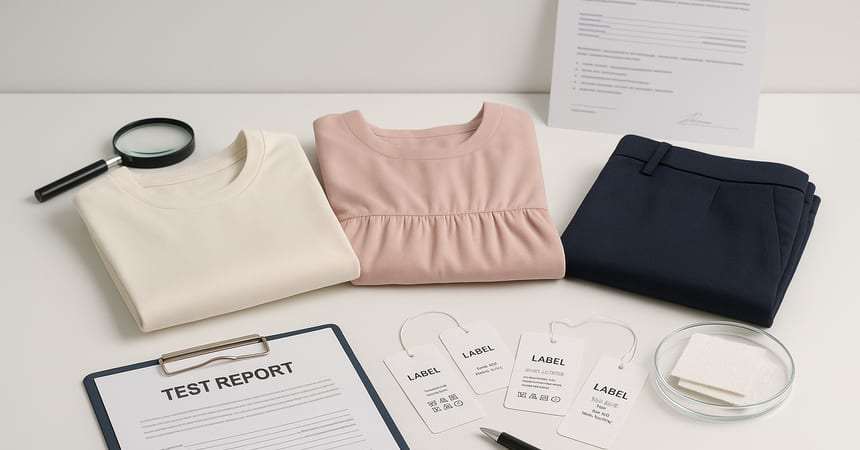
Fabric composition drives which tests apply, the label is the product's passport, and a lab discrepancy means no certificate, plus fines for false labelling.
How many samples, in what state, with what composition data and what labelling, the four preparation areas that decide whether testing passes first time.
Check the HS code, register the trademark, get a Cypher ID under GACC Decrees 248 and 249, and produce the Chinese counter-label. In that order.
The six things a UAE food label must carry, the five mistakes that get shipments rejected, and why the date format matters more than exporters expect.
What ANVISA requires before a cosmetic can be sold in Brazil: the four document sets, the three tests, Portuguese labelling rules and the ingredient limits.
Registering on the GACC platform, the certificates needed before you can, local quarantine testing, Chinese labelling and the eight documents customs asks for.
Food, meat, dairy and fish process equipment declares under TR CU 010, with TR CU 004 and 020 on top for low-voltage. Documents, schemes and label content.
Which technical regulation applies to your textiles, the mandatory label fields under TR CU 017/2011 and 007/2011, and the extras by product type.
What each field in an Ex marking means under GOST 31441.1-2011, groups, protection types, subgroups and temperature class, and where it must appear.
Seven STB standards were reissued on 1 November 2020 with changes to structure, terms and definitions. No new testing was required.
What the nameplate on Ex equipment must carry under TR CU 012/2011, where it goes, how long it has to survive, and the optional fields worth adding.
The fifteen items a cosmetics label must carry in the Customs Union, including the two that only apply to specific product types.
The invoice fields that keep samples under the customs threshold, the label every item needs, and why the courier choice can sink the registration.
No. The label in Russian is a condition of release into circulation, customs checks it, and the regulations do not provide for re-labelling after arrival. The compliant label goes on at the factory, so we put labelling on the critical path next to testing.
Under TR CU 012 six items are mandatory: manufacturer, product designation, date of manufacture, the Ex group and protection level, the type of protection, and for Groups II and III the temperature class or maximum surface temperature. Both the Ex mark and the EAC mark go on, in Russian, on the main part of the equipment.
Send the product name, HS code and technical data. You get back the applicable route, the document list and a timeline, before any commitment.
Scoping is freeReply within one working day