Certificates for Agricultural Suppliers to Israel
Phytosanitary, agrochemical, veterinary, food quality, kosher and environmental, six certificate families, three regulators, and a 2 to 6 month lead time.

EAEU declarations and SGR, GACC in China, ECAS in the UAE, FSSAI in India, ONSSA in Morocco. Why the establishment registers before the product does.
Food is the product group where the establishment is often registered before the product is even assessed. China’s GACC registers foreign producers under Decrees 248 and 249, the number goes on the pack, and a producer can only register once it holds a fumigation or phytosanitary certificate from the country of production. India issues the FSSAI import licence only to Indian-registered companies and then a No Objection Certificate per consignment. Morocco fails a submission without a local representative. These are lead-time items measured in months, and they are the most common reason a food export programme misses its season.
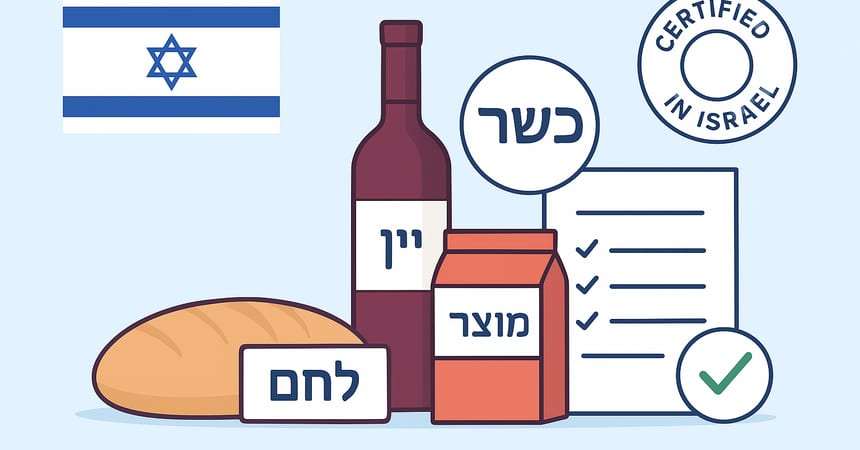
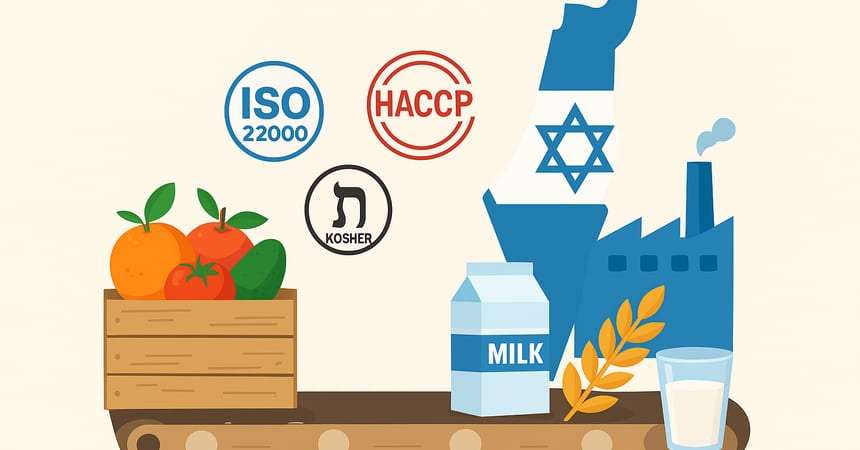
In the EAEU the product carries one of two documents: a declaration of conformity, or a state registration certificate where the product is on the specialised list in TR CU 021, with TR CU 022 setting the label. In the UAE sensitive categories such as baby food need ECAS and the Emirates Quality Mark, and applications fail on labelling, packaging and safety testing before they reach assessment. Israel regulates through the Ministry of Health, the Standards Institution and the Chief Rabbinate, with Hebrew labelling mandatory and kosher status commercially decisive. Halal and kosher decide the sale; the technical approval decides the legality; customs checks both.
The label is the second decision point and the more frequent failure: composition in descending order of mass, allergens, nutrition, dates in the destination’s format, a Chinese counter-label, and a text free of medical claims. Three to nine months is realistic where registration is required. The articles below cover each market, food processing equipment under TR CU 010, and the two food cases. Send the product, its HS code and the destination and we will lay out what registers first.
No articles match that.
Phytosanitary, agrochemical, veterinary, food quality, kosher and environmental, six certificate families, three regulators, and a 2 to 6 month lead time.
Three authorities, Hebrew labelling that is mandatory rather than customary, and kosher status that is not legally required but commercially decisive.
Check the HS code, register the trademark, get a Cypher ID under GACC Decrees 248 and 249, and produce the Chinese counter-label. In that order.
Which products need it, which certification bodies the GCC actually recognises, and the audit and laboratory stages between application and certificate.
Finding suppliers willing to commit, coordinating ten engineers, and persuading a client that international testing is worth it. What actually unblocked each.
ECAS and EQM for sensitive categories like baby food, the documentation and testing that gets applications rejected, and the MOIAT platform in between.
Registering on the GACC platform, the certificates needed before you can, local quarantine testing, Chinese labelling and the eight documents customs asks for.
An FSSAI import licence issued only to Indian-registered companies, plus a No Objection Certificate per consignment. The seven stages and the documents.
Declaration or State Registration Certificate, which applies, the nine food technical regulations, mandatory label content, and how long the document lasts.
Because the registrations attach to the establishment and the category, take months, and cannot be accelerated by having goods ready. GACC registration in China, an FSSAI licence in India and Moroccan supplement registration all run on the authority’s clock. The goods are the fast part.
No. Halal in the GCC and kosher in Israel open the market and decide whether retailers stock the product. The technical approval, ECAS, SASO or SII testing, and the label make it legal. Customs in the Gulf checks both, and a halal-certified product without its national document is held.
Send the product name, HS code and technical data. You get back the applicable route, the document list and a timeline, before any commitment.
Scoping is freeReply within one working day