Scheme 9c: Certifying Machines Too Big to Ship
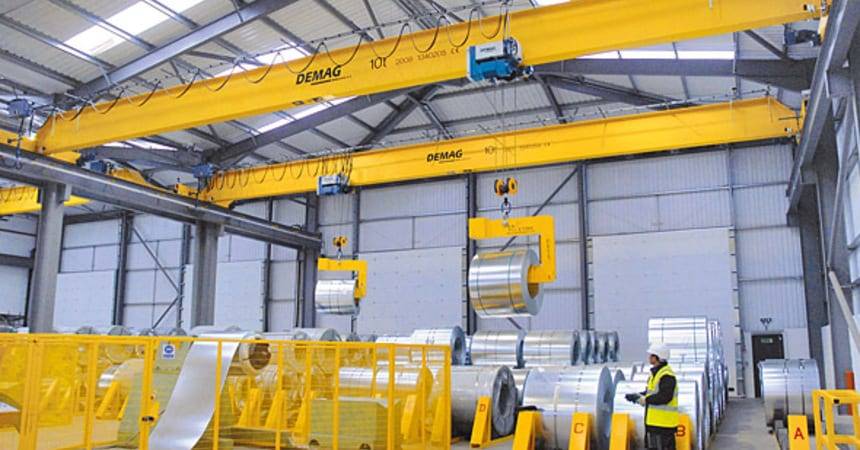
Certification under TR CU 010 normally means a site audit and samples delivered to an accredited EAEU laboratory, impossible for a tower crane. Scheme 9c removes both. It applies to a limited batch delivered to one named site, and rests entirely on an investigation of the manufacturer's documents.
What problem does scheme 9c solve?
Manufacturers of electronic devices, cosmetics or food rarely think about how a machine gets certified. Manufacturers of large machinery under TR CU 010/2011, On safety of machinery and equipment, think about little else.
EAC certification normally involves two things: a site audit by a representative of the accredited certification body, and testing of samples in an accredited EAEU laboratory, which means delivering the samples from the manufacturer to that laboratory. Testing can sometimes be merged with the site audit, but the logistics remain a real obstacle. And events outside anyone’s control, such as closed borders, can stop the whole process.
For a manufacturer planning to import large machinery into the EAEU, that is a scheduling risk with no obvious fix.
What scheme 9c does
TR CU 010 contains a scheme that avoids the usual procedure entirely. Scheme 9c is used only for a batch of products, which makes it right for a manufacturer with no plans for serial import and therefore no need of a serial certificate.
The batch has to be a limited quantity of products delivered to a certain place, a production site or plant in a Customs Union country.
The archetypal case: a manufacturer wants to import two tower cranes and has already found a customer in the Union. There is no interest in importing more, and the cranes are far too large to ship for testing. Under the normal route the deal fails on logistics. Under 9c it does not.
No site audit. No samples. The scheme rests on an investigation of the manufacturer’s documents instead.
What documents does scheme 9c rest on?
| Document | Required? |
|---|---|
| Test reports | Mandatory |
| ISO certificates for every factory producing the item | If any |
| Certificates for materials | If any |
| Drawings | Yes |
| European certificates for the machines | If any |
| Operational manual in the Union’s working language | Yes |
| Justification of Safety | Yes |
Everything in that list must be translated into the Union’s working language.
The trade-off is visible in the table: what 9c removes in logistics, it adds in documentation. A manufacturer whose test reports are thin, or whose drawings are not in a state to be submitted, still has that work to do.
Who applies?
As with every EAC declaration and certificate, there must be an applicant, and the requirements are no different here than under any other regulation: a legal entity resident in a Customs Union country, prepared to carry responsibility for the product.
Which products can use it?
Under TR CU 010, scheme 9c is available for:
- Cranes
- Garage equipment for motor vehicles and trailers
- Agricultural machinery
- Equipment for mines
- Mechanised instruments, including electrical
Sources
- TR CU 010/2011, On the safety of machinery and equipment, Eurasian Economic Commission, conformity assessment schemes
- EAEU register of accredited certification bodies
Frequently asked questions
When can scheme 9c be used?
For a batch only, a limited quantity of products delivered to a certain place, meaning a production site or plant in a Customs Union country. It suits a manufacturer not planning serial import and therefore not needing a serial certificate: two tower cranes for one identified customer is the archetypal case.
Does scheme 9c need samples or a site audit?
Neither; the scheme exists to remove both. The certification body works from an investigation of the manufacturer's documents instead, test reports, ISO certificates, material certificates, drawings and any European certificates for the machines, all translated into the Union's working language.
Which products can use it?
Cranes, garage equipment for motor vehicles and trailers, agricultural machinery, equipment for mines, and mechanised instruments including electrical ones, among others under TR CU 010.
Not sure which of these applies to your product? Send it and we will tell you
Related articles
Products Under TR CU 010: The Full Scope List
All 73 product positions under the EAEU machinery regulation, which take a certificate and which a declaration, plus the thirteen categories excluded outright.
EAC Approval for Pumping Equipment: Which Form Applies
Industrial pumps declare, household pumps certify, Ex pumps have one route only. The regulations that stack on top, plus a field-test case study.
The Justification of Safety: What Goes in the Document
The five sections of a Justification of Safety, the two technical regulations that require it, who writes it, and when one document covers a whole family.