Electrical Safety and EMC Requirements in Israel
Israel's certification system covers Safety and EMC separately. Which IEC standard applies to which product class, and what each test programme covers.

SII approval on CB reports or a Ministry of Economy exemption by customs code, the 62368 TI standard, Hebrew labelling and three food regulators.
Electrical products reach the Israeli market by one of two routes. The Standards Institution of Israel, SII, grants approval on a review of CB test reports, which is the significant point for a manufacturer already in the CB Scheme because the existing report does the work. Or the Ministry of Economy grants an exemption based on the customs code. Wireless and telecom terminals are separate and go through the Ministry of Communications. Safety follows national standards based on the IEC series by product class, and EMC follows IEC 61000.
Standard 62368 TI is the one to plan around for electronics and IT. It is based on IEC 62368-1 and replaced IEC 60065 for audio-video and IEC 60950-1 for IT equipment with one risk-based system, shifting the question from whether the device passes a checklist to whether it is designed so the hazard cannot arise. A CB report to the old standards no longer carries a product through.
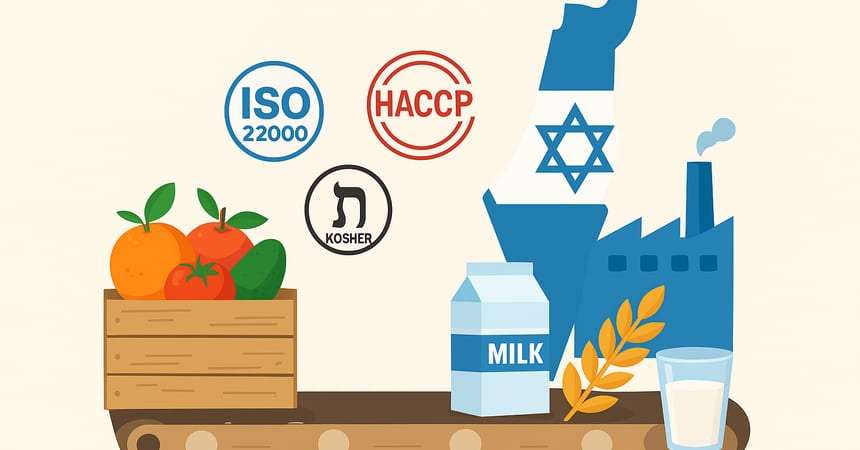
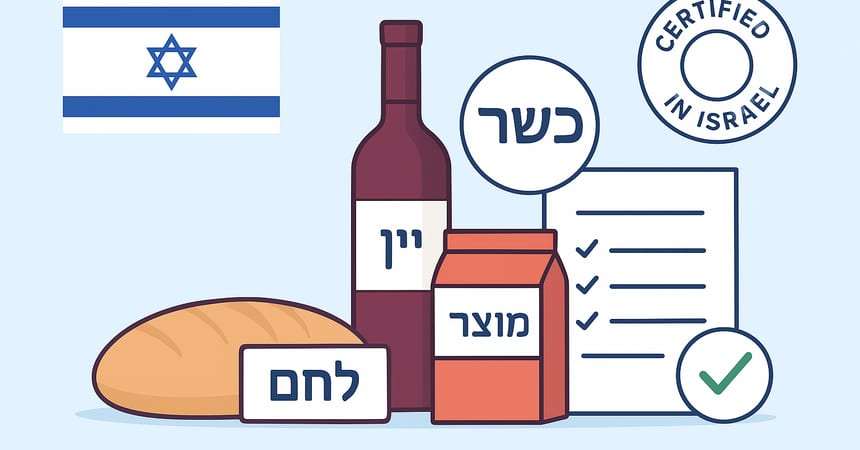
Food is regulated by three bodies, the Ministry of Health for sanitary standards, the Standards Institution for testing and the Chief Rabbinate for kosher status. Hebrew labelling is mandatory, and kosher certification, though not legally required, decides whether supermarkets stock the product. Agricultural suppliers face six certificate families and two to six months of document preparation. The articles below cover the two electrical routes, safety and EMC, 62368 TI, food and agriculture. Send the product and its CB report and we will say which route applies.
No articles match that.
Israel's certification system covers Safety and EMC separately. Which IEC standard applies to which product class, and what each test programme covers.
It replaced IEC 60065 and 60950-1 with one risk-based system. What Energy Source Classification changes, and which products it now covers.
Phytosanitary, agrochemical, veterinary, food quality, kosher and environmental, six certificate families, three regulators, and a 2 to 6 month lead time.
Three authorities, Hebrew labelling that is mandatory rather than customary, and kosher status that is not legally required but commercially decisive.
SII approval based on CB reports, or a Ministry of Economy exemption by customs code. Plus when MoC type approval applies, and when it does not.
For SII approval it is the basis: the Institution reviews the CB report and test certificate, and where they cover the current product to the standard Israel applies, approval issues without new testing. A report to IEC 60950-1 or 60065 for a product now under 62368 TI is the case where it is not enough.
Not by law. Commercially, yes: the supermarket chains will not stock a product without it. Hebrew labelling is the legal requirement, alongside Ministry of Health sanitary standards and SII testing, and kosher status comes from the Chief Rabbinate through a recognised body.
Send the product name, HS code and technical data. You get back the applicable route, the document list and a timeline, before any commitment.
Scoping is freeReply within one working day