EAC Certification of Industrial Motors: Which Rules Apply
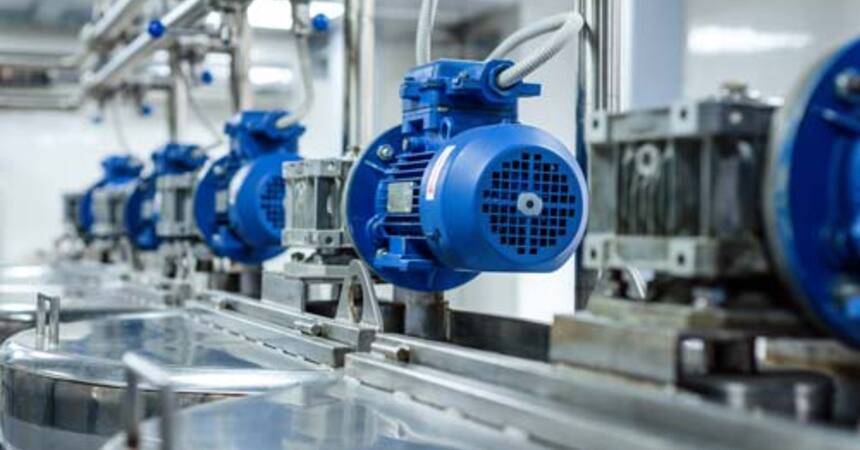
Three properties decide which regulations an industrial motor falls under: whether it will run in a hazardous area, its supply voltage, and whether it is synchronous or an induction machine. Ex motors need a TR CU 012 certificate; low-voltage motors need TR CU 004; synchronous motors add TR CU 020. Above 1000 VAC there is still no EAEU regulation at all.
Three questions decide everything
The EAC system routes products by what they are and where they will be used, and motors are no exception. Answer these three and the document list follows.
| Question | If yes | If no |
|---|---|---|
| Will it run in a hazardous area? | TR CU 012 certificate, mandatory | Continue |
| Is the supply between 50 and 1000 VAC? | TR CU 004 declaration | See high voltage below |
| Is it a synchronous motor? | TR CU 020 declaration | Induction motors are out of scope |
Note that “hazardous” here is not about the industry. Oil and gas, chemicals and food processing are sectors, not classifications. What matters is whether there is a risk of the motor exploding while it operates.
What does a motor for hazardous areas need?
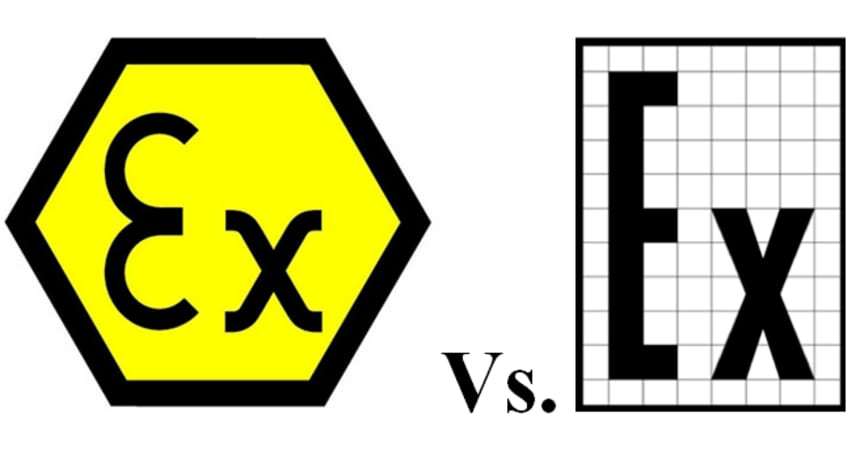
A product intended for hazardous conditions must carry the relevant Ex-proof marking and hold ATEX or IECEx certificates. For the EAEU that is not sufficient on its own: a certificate of conformity to TR CU 012 is mandatory before the product can be imported.
One consequence catches people out. TR CU 004 cannot be applied to Ex-proof motors, TR CU 012 already covers the requirements for this equipment, so the low-voltage regulation does not stack on top of it.
Low-voltage motors
The supply voltage is the deciding factor for any electrical device.
- Low voltage: above 50 VAC and below 1000 VAC → TR CU 004 applies.
- High voltage: above 1000 VAC → see below.
A motor drawing between 50 and 1000 volts is subject to TR CU 004/2011, the low-voltage equipment regulation.
Declaration or certificate?
For motors it is a declaration in most cases, and that has a practical consequence. A declaration can be issued on European test reports with no additional testing, provided the standard those reports were produced against is harmonised with the corresponding EAEU standard.
The manufacturer can still choose the 3d scheme, which means testing in an accredited laboratory in the EAEU. Sometimes that is not physically possible: a motor may simply be too large to deliver to a laboratory. Testing at the manufacturer’s site is then an option, decided case by case.
Electromagnetic compatibility
TR CU 020 applies to equipment with active electronic circuits that can generate electromagnetic fields. Whether a motor falls under it depends on its type:
- Induction (asynchronous) motors, not subject to TR CU 020. They have no active electronic components, and no electrical connection is needed to start them.
- Synchronous motors, a declaration of conformity is required. The procedure is the same as for TR CU 004.
What covers motors above 1000 VAC?
There is still no common EAEU regulation for high-voltage equipment. At the time this was originally written, in December 2021, the regulation was under development by the Eurasian Economic Commission with no available detail on when it would be issued.
Motors with a supply above 1000 VAC are therefore not subject to a technical regulation on the basis of their voltage. The gap may close: check the current status before relying on it, since a new regulation changes the answer for a whole product class at once.
Sources
- TR CU 012/2011, On the safety of equipment for work in explosive atmospheres, Eurasian Economic Commission
- TR CU 004/2011, On the safety of low-voltage equipment
- TR CU 020/2011, Electromagnetic compatibility of technical equipment
- IECEx and ATEX certification schemes
Frequently asked questions
Do induction motors need a TR CU 020 declaration?
No. TR CU 020/2011 applies to equipment with active electronic circuits capable of generating electromagnetic fields. Induction, asynchronous, motors have no active electronic components and need no electrical connection to start, so the regulation does not reach them. Synchronous motors do need a declaration under it.
Can European test reports be used?
Yes, in most cases. The usual document for a motor is a declaration, and it can be issued on European test reports without further testing, provided the standard applied is harmonised with the corresponding EAEU standard. The 3d scheme with testing in an accredited EAEU laboratory remains available if the manufacturer prefers it.
What covers motors above 1000 VAC?
Nothing yet. There is still no common EAEU technical regulation for high-voltage equipment; it was under development by the Eurasian Economic Commission as of December 2021 with no announced issue date. Motors with a supply above 1000 VAC are therefore not subject to a regulation on that basis alone.
Not sure which of these applies to your product? Send it and we will tell you
Related articles
EAC Marking for Explosion-Proof Equipment: TR CU 012
What the nameplate on Ex equipment must carry under TR CU 012/2011, where it goes, how long it has to survive, and the optional fields worth adding.
EAC Approval for Power Adapters and Chargers
One certificate covers TR CU 004 and 020; RoHS goes on a separate declaration. The four steps, the annual inspection, and why RoHS testing takes a month.
EAC Approval for HVAC Systems: Household vs Industrial
Household HVAC needs certificates under TR CU 004 and 020 plus a RoHS declaration. Industrial HVAC needs none of that, it declares under 004, 020 and 010.