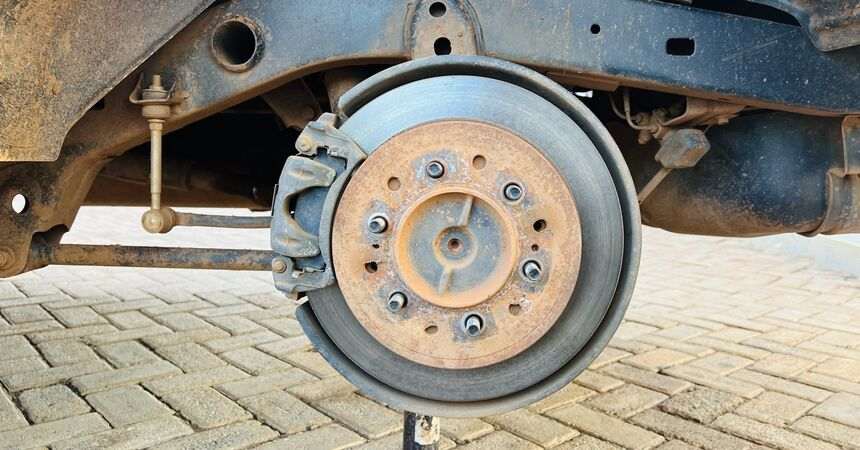
EAC Approval for Automotive Spare Parts
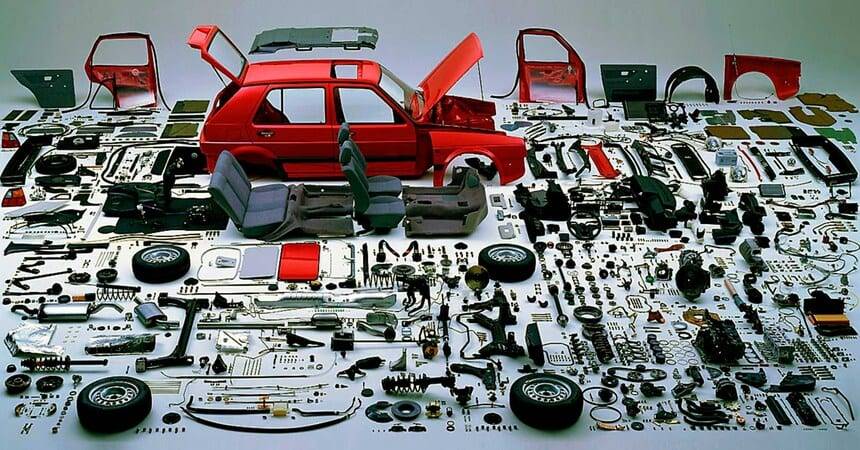
Automotive spare parts going to the Customs Union need an EAC Certificate of Conformity under TR CU 018. Maximum validity is four years, shorter than most regulations, testing must happen in an accredited CU laboratory, and serial certificates carry an annual re-test.
Which spare parts need EAC approval?
Bearings, ignition coils, timing kits, cross and side rods, tie-rod and rack ends, belts of every type, stabiliser links, brake pads, discs and shoes, electrical water pumps, strut mounts, hydraulic tensioners, control, idler and pitman arms, joints, hubs, tyres, thermostats, thermo sensors, timing chains, vehicle glass, air filters, clutches, drive shafts, shock absorbers, starters, all need mandatory EAC approval for supply to the five EAEU member states.
TR CU 018, On the safety of wheeled vehicles, governs the certification of automotive spare parts, and the main approval document is the EAC Certificate of Conformity.
How long is a TR CU 018 certificate valid?
A certificate can cover a single delivery (batch) or serial production. A serial certificate can be used for several deliveries within its validity period.
Maximum validity under TR CU 018 is 4 years, not the 5 years common elsewhere. Carry that difference into planning: a supply agreement written on a five-year assumption outlives the document.
Who applies
A legal resident of a Customs Union member country. A foreign manufacturer appoints one.
The documents
- An applicant agreement between the manufacturer and its applicant company
- The applicant’s entitling documents
- A technical description for each declared product, in the Union’s working language
The part numbers requirement
All part numbers must appear in the certificate annex, written in full. Coding is not permitted.
Prepare an Excel file with this information in advance. This is the item that most often holds up an otherwise complete application, because a catalogue that uses abbreviations or family codes cannot simply be pasted in.
Testing
Certification under TR CU 018 requires mandatory local testing in an accredited laboratory within the Customs Union. Samples are provided so quality and compliance with the applicable GOST standards can be checked, and the approval document issues only on a positive test report.
What does the annual inspection involve?
A serial production certificate carries an annual maintenance procedure, inspection control, which requires re-testing the product.
Its purpose is to confirm that the quality declared at the outset has not changed, and that the product still meets the TR CU 018 requirements. It is a recurring cost across the certificate’s four-year life, and it belongs in the budget at the start rather than arriving as a surprise in year two.
Sources
- TR CU 018/2011, On the safety of wheeled vehicles, Eurasian Economic Commission
- Eurasian Economic Commission Board Resolution No. 77 of 14 July 2015, product lists under TR CU 018
Frequently asked questions
How long is a TR CU 018 certificate valid?
Four years at most, which is shorter than the five years common under other technical regulations. It can be issued for a single delivery or batch, or for serial production, where it covers several deliveries within that validity period.
Can foreign test reports be used?
No. Certification under TR CU 018 requires mandatory local testing in an accredited laboratory within the Customs Union. Samples must be provided to check quality and compliance with the applicable GOST standards, and the approval issues only on a positive test report.
How should part numbers be listed?
In full, in the certificate annex, coding is not permitted. Prepare an Excel file with every part number in advance, because the annex cannot be assembled from an abbreviated or coded list.
Not sure which of these applies to your product? Send it and we will tell you
Related articles
Certification or Declaration Under TR CU 018
Three conformity assessment forms, two of which apply to parts. Where responsibility sits in each, and what decides which one your product takes.
TR CU 018/2011: What the Vehicle Regulation Governs
Scope across categories M, N and O, chassis and safety components; the requirements it sets; and who in the supply chain it binds.
Which Products Fall Under TR CU 018
Categories M, N and O, chassis, and safety-related components. Plus what modification triggers, and the three vehicle types excluded outright.