Certifying Locks and Access Systems for Canada
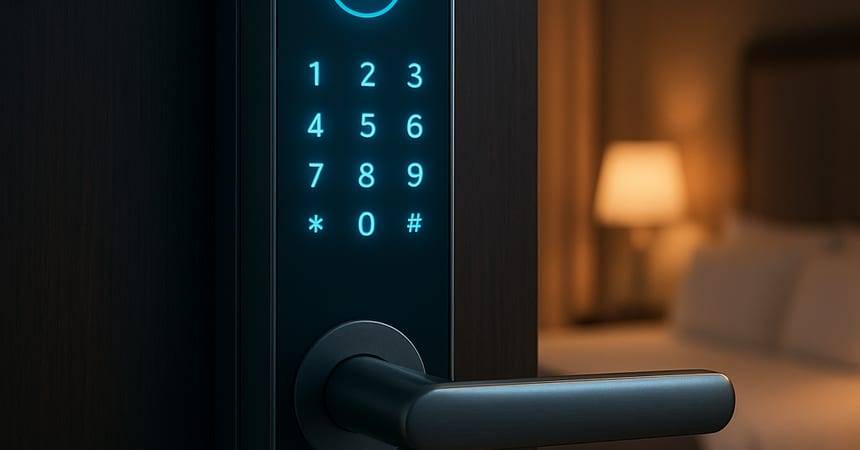
An electronic lock in Canada is assessed as an electrical product, a radio device, a fire-relevant assembly and a connected device holding personal data, four regimes at once. Add bilingual labelling and provincial building codes, and the compliance work is wider than the product suggests.
What kind of product is a modern lock?
Four kinds at once, and that is the whole difficulty.
Manufacturers in this sector produce mechanical and electronic devices together: locks, lock electronics, PCBs and PCBAs, access modules and security systems. Those products increasingly include wireless communications, mobile access, readers and identification devices, smart home integration and hospitality solutions.
So a single product line touches product quality, electrical and fire safety, data protection, and the requirements of both the power grid and the radiofrequency regulator.
Canada is a developed market with strict safety standards, electronics regulations and data protection obligations, and companies selling into hotels, residential complexes, offices and infrastructure projects meet all of them.
What has to be verified?
| Requirement | What it covers |
|---|---|
| Electrical safety | Compliance with Canadian electrical safety standards, CSA, or the applicable provincial electrical standards |
| EMC and radio frequency | EMC testing for devices with radio modules, wireless communication or grid connection; possible RF licensing; ISED Canada compliance |
| Fire safety and materials | Fire resistance of materials, coatings and cables; use of non-magnetic and non-toxic materials |
| Data protection and cybersecurity | Encryption, protection against attack, and security update requirements for connected devices |
| Labelling and instructions | Clear information in English and/or French: manufacturer or importer details, country of origin, warnings, safety instructions |
| Laboratory testing | Accredited Canadian or internationally recognised laboratories for safety, EMC, durability and environmental resistance |
The cybersecurity row is the one that has changed most in recent years. A lock that phones home is a connected device holding data about who entered a building and when, and it is regulated accordingly.
What are the six steps to certify a lock in Canada?
- Regulation analysis, determine the product category: mechanical, electronic, wireless, mobile-enabled.
- Documentation and testing, specifications, schematics, and accredited laboratory testing for safety, EMC, fire resistance and climate.
- Material compliance, RoHS-equivalent obligations, no hazardous substances, environmental requirements.
- Labelling and instructions, Canadian language requirements in English and French, and safety information standards.
- Certification and registration, with CSA, ISED, or other recognised bodies such as UL or ETL where required.
- Audits and maintenance, ongoing inspections, standard updates, continuing safety measures.
Step 6 is not optional tidy-up. Standards in this field move, and a certificate obtained against a superseded edition ages badly.
What compliance is worth
- Market access without the risk of customs rejection or sales refusal.
- Eligibility for large-scale projects, hotels, residential complexes, commercial buildings, infrastructure, where compliance is a bid precondition.
- Reputation, particularly on the safety and durability claims that buyers in this category compare.
- Easier export to other countries that recognise Canadian standards.
What should you plan around?
- Provincial differences in labelling, language and building codes. A product compliant nationally may still need adjustment for a specific province.
- Evolving law on safety, data protection and energy.
- Accreditation. Not every testing facility qualifies; using one that does not means repeating the work.
- Adaptation cost. Meeting Canadian electrical and RF requirements often means changing the product, not only the paperwork.
Sources
- CSA Group, Canadian Standards Association, electrical safety standards
- ISED Canada: Innovation, Science and Economic Development, radio equipment and EMC requirements
- Canadian provincial electrical safety authorities and building codes
Frequently asked questions
Which certifications does a connected lock need in Canada?
Electrical safety to Canadian standards such as CSA or the applicable provincial electrical standards; EMC and radio compliance with ISED Canada for anything with a radio module or wireless communication; fire and material requirements; and data protection obligations for connected devices. UL or ETL may also be required.
What are the labelling requirements?
Product and packaging must carry clear information in English and/or French, including manufacturer or importer details, country of origin, warnings and safety instructions. Language requirements are among the areas where provinces differ, so the national answer is not always the complete one.
What makes Canada harder than it looks?
Provincial differences in labelling, language and building codes; safety, data protection and energy laws that keep changing; the fact that not every testing facility qualifies as accredited; and the additional cost of adapting products to Canadian electrical and RF requirements.
Not sure which of these applies to your product? Send it and we will tell you
Related articles
Certification or Declaration Under TR CU 018
Three conformity assessment forms, two of which apply to parts. Where responsibility sits in each, and what decides which one your product takes.
TR CU 018/2011: What the Vehicle Regulation Governs
Scope across categories M, N and O, chassis and safety components; the requirements it sets; and who in the supply chain it binds.
Which Products Fall Under TR CU 018
Categories M, N and O, chassis, and safety-related components. Plus what modification triggers, and the three vehicle types excluded outright.