
Certifying a Wireless Pressure Sensor in Brazil
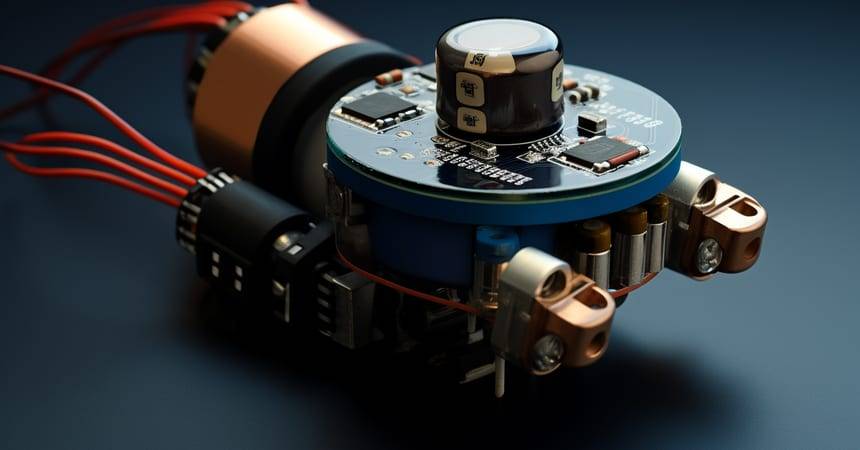
A wireless pressure sensor is assessed twice over: as a pressure-sensing device against safety standards, and as a radio device against communication rules. It must operate inside Brazil's designated frequency bands and not interfere with other equipment, and it faces environmental testing across Brazil's climate range.
Why is a wireless sensor assessed twice?
Brazil applies rigorous standards to technology and safety equipment. A wireless pressure sensor meets two of them at once, because it is two things at once: a measuring device that has to be accurate and safe, and a radio device that has to behave itself on the spectrum.
INMETRO has specific guidelines for electronic devices, and wireless devices in particular must meet both safety standards and communication regulations. The wireless side means the device must not interfere with other devices and must operate within Brazil’s designated frequency bands.
Sensors of this kind are used across healthcare, automotive and industrial applications, where real-time data drives decisions, so the requirement is not ceremonial.
What are the four steps to INMETRO certification?
1. Preliminary assessment. Establish which INMETRO standards apply, addressing both the pressure-sensing function and the wireless function. Products get stuck here when only one half is considered.
2. Documentation. The file needs:
- Technical specifications covering the wireless frequency range, the accuracy of the pressure readings, the battery specification and the safety features
- Details of encryption and security measures protecting data privacy
- User manuals translated into Portuguese, so end users understand correct usage and safety precautions
3. Device testing.
| Test type | What it establishes |
|---|---|
| Operational | Accuracy of the pressure readings |
| Wireless communication | Non-interference and secure data transmission |
| Environmental | Performance across Brazil’s range of temperatures and humidities |
4. Certification review. On successful completion of testing, an evaluation leads to the grant of INMETRO certification.
Three things specific to this product type
Frequency range. The device must operate within the bands allocated in Brazil for this kind of equipment. A radio module configured for another region’s plan is the most avoidable failure on the list.
Battery and power. In a wireless device, battery safety and lifespan carry weight they do not carry in a mains-powered instrument, and compliance with the standards for battery-operated devices is assessed on its own terms.
Data security. Robust encryption and security measures are expected.
What tends to go wrong?
- Regulatory change. Wireless communication rules move quickly. Review INMETRO’s guidelines rather than assuming last year’s answer holds.
- Technical modifications. Test results may require changes to the device. Plan for the possibility instead of treating certification as a pass/fail gate at the end.
- Language. All documentation, and especially safety information and user manuals, has to be translated accurately into Portuguese. An inaccurate safety translation is a worse outcome than an untranslated one.
Sources
- INMETRO, Instituto Nacional de Metrologia, Qualidade e Tecnologia, conformity assessment requirements
- Anatel spectrum allocation and radio equipment certification rules, Brazil
Frequently asked questions
Which aspects of a wireless sensor are tested?
Three. Operational tests confirm the accuracy of the pressure readings. Wireless communication tests confirm non-interference and secure data transmission. Environmental tests expose the device to the range of temperatures and humidities found across Brazil's climates.
What documentation is needed?
Technical specifications covering the wireless frequency range, pressure reading accuracy, battery specification and safety features; details of encryption and security measures for data privacy; and user manuals translated into Portuguese so end users understand correct use and safety precautions.
What are the specific risks for this product type?
Three: operating outside the frequency bands allocated in Brazil, which causes interference; battery safety and lifespan, which matter more in a device with no mains supply; and data security, where robust encryption is expected.
Not sure which of these applies to your product? Send it and we will tell you
Related articles
INMETRO and ANVISA: Two Brazilian Routes Compared
INMETRO handles equipment and machinery, ANVISA handles cosmetics and health products. Different stages, different validity, and one shared prerequisite.
INMETRO Certification for German Equipment Makers
The five-step INMETRO route into Brazil for industrial, electrical and laboratory equipment, with realistic timelines and what it buys you in tenders.
Certifying Explosion-Proof Equipment for Brazil
INMETRO certification for Ex equipment: the three product categories, the document list, and when IECEx gives presumption of conformity and ATEX does not.